Three points, three goals, ₦5.25m: Inter Lagos’s punishment and how NPFL sanctions actually work
8 min read
A 1-1 draw should have been the end of it. Instead, Inter Lagos’s Matchday 7 home game against Katsina United spiralled after the final whistle, with attacks on match officials “as they made their way from the dressing room to their vehicle,” according to the Nigeria Premier Football League (NPFL). By Monday night the league had lowered the boom: a ₦5.25 million fine, plus the deduction of three points and three goals from the club’s accrued tallies for “assaulting & causing injury on the first assistant referee.”
The case is a sharp, real‑time explainer of the NPFL27 Framework & Rules in action: what clubs are required to do around security, how the league charges and decides breaches, how sanctions are structured, and what a points-and-goals deduction actually means in a live league table. Inter Lagos, 19th on five points after seven matches, have 48 hours from notification to appeal the sanctions. Here’s the mechanism behind the headlines.
What the NPFL punished in the Inter Lagos–Katsina United flashpoint
The NPFL’s decision, communicated via its X handle and reported by Nigerian outlets, sets out a chain of breaches after Sunday’s Matchday 7 fixture. The league charged Inter Lagos for “breaching #NPFL27 Framework & Rules,” starting with a failure to “provide adequate & effective security” that allowed “unauthorized persons to gain access to restricted areas,” leading to attacks on match officials as they left the dressing rooms. The league further found the club “failed to ensure proper conduct of their officials and supporters,” with the result that officials were “held hostage for more than an hour after the match.”
It did not stop at intimidation. The decision states that Inter Lagos officials, “in company of some of their supporters, intimidated, harassed & verbally abused the match officials,” conduct “capable of bringing the game to disrepute.” Critically, the club’s team manager, together with some supporters, “assaulted the match officials,” injuring the first assistant referee in the face and causing the loss of personal belongings and damage to his mobile phone. Those findings underpin both the financial penalties and the sporting deductions that followed.
The rulebook and the body that acts: NPFL27 Framework & Rules
Formally, the league’s charges cite the “NPFL27 Framework & Rules,” the governing document for conduct in the 2026/27 season. The NPFL announced the decision in a public statement on X, and the disciplinary language in the published decision makes clear it is the league body that investigated, found the facts, and imposed sanctions. Premium Times summarised this as a “disciplinary decision,” detailing each breach and corresponding sanction.
The phrasing in the decision matters. Sanctions flow from specific failings: inadequate security, failure to control officials and supporters, harassment and assault, and the especially grave holding of match officials “hostage for more than an hour.” That stepped structure is how the NPFL translates the Framework & Rules into applied discipline. Where assaults result in injury to a match official, the decision went beyond fines to impose a points and goals deduction from “accrued” tallies — a sporting penalty designed to bite in the standings as well as on the balance sheet.
Home-game security is a core club obligation
Two of the clearest obligations in the Inter Lagos finding speak to home‑match safety: provide “adequate & effective security” and keep “unauthorized persons” out of restricted areas. The decision ties the failure on both counts directly to the attack on officials between the dressing room and their vehicle. In other words, the NPFL treats security not as a box‑tick but as a proximate cause: when breaches enable violence or intimidation against match officials, the club is liable for the outcome.
Clubs are also responsible for the behaviour of their own people. The decision points to a “failure to ensure proper conduct” of officials and supporters, followed by language about intimidation, harassment and verbal abuse “capable of bringing the game to disrepute.” That duty of control extends past the final whistle and out of the tunnel; in this case, the league found officials were detained for “more than an hour,” a detail that carries its own distinct sanction in the fines.
| Breach/Decision | Sanction |
|---|---|
| Failure to provide adequate & effective security | ₦2,000,000 fine |
| Holding match officials hostage for more than an hour | ₦1,000,000 fine |
| Assault on match officials | ₦2,000,000 fine |
| Compensation to injured assistant referee (loss of items, phone damage, treatment) | ₦250,000 awarded |
| Assault causing injury to first assistant referee | Deduction of 3 points and 3 goals from accrued tallies |
| Appeal window | 48 hours from date of notice to appeal |
The money: fines add up, and compensation is itemised
On the financial side, the sanctions are granular. The NPFL levied ₦2 million for the security failure and another ₦1 million specifically for holding officials “hostage for more than an hour.” A separate ₦2 million fine was imposed for the assault itself. In addition, the decision orders ₦250,000 “as compensation to the affected assistant referee for the loss of his personal items, damage to his mobile phone & treatment to the injury he sustained.” That takes Inter Lagos’s total financial exposure to ₦5.25 million before any appeal is heard.
The compensation line matters. It recognises the material harm to a match official, not just the abstract principle of discipline. By enumerating lost items, a damaged phone and medical treatment, the NPFL’s decision ties restitution to the specific consequences of the breach. It also sits alongside — not instead of — the club fines, a dual track that both punishes the club and makes the victim whole for quantifiable losses.
The sporting hit: how points and goals deductions apply
Beyond the cheque, the competitive blow is explicit. For “assaulting & causing injury on the first assistant referee,” the NPFL ordered that “three points and three goals shall be deducted from the accrued points & goals of Inter Lagos.” That language makes two things clear: the deduction is punitive, and it applies to the club’s accumulated tallies rather than to a future fixture. Premium Times underlined the impact plainly: “The sanctions could therefore significantly affect Inter Lagos’ campaign as they continue their NPFL season.”
What you won’t find in the decision is any speculative arithmetic. Complete Sports reported that Inter Lagos are “currently in 19th on five points after seven matches.” The league’s wording does not recalculate a new total in public; it states the mechanism — deduct “from the accrued points & goals” — and leaves the standings to reflect the penalty once processed. The goals deduction is similarly framed as a straight subtraction from the club’s accrued goals figure.
The detail
Why ‘accrued’ matters in NPFL deductions
The NPFL’s choice of words — “deducted from the accrued points & goals” — is the hinge in understanding how these punishments bite. It signals a retroactive adjustment to the current ledger rather than a future handicap. There’s no mention of docking a specific match result or awarding a walkover; the sanction acts on the totals that sit in the table as of the decision. In practice, that means the league office updates the club’s points and goals columns downward, and the standings reorder accordingly once the change posts.
The twin deduction also closes a common loophole. Points alone can still leave a club level in a mini‑table; slicing three from the “accrued goals” figure adds a second axis of pain because it reduces the raw goal tally that underpins goal calculations in published standings. The decision links this higher‑order punishment to a specific trigger — assault that caused injury to the first assistant referee — distinguishing it from the fines for security and conduct breaches. Finally, the 48‑hour appeal window runs alongside this mechanism: the decision takes effect subject to appeal; if a club lodges its case in time, the league has a process to review without having to invent a bespoke remedy on the fly.
Appeals exist — and they’re fast-tracked by design
Inter Lagos “have 48 hours from the date of notice to appeal the sanctions.” That is the only timeline the decision discloses, and it is tight by intent: the league wants disciplinary matters resolved quickly in a live competition. The NPFL’s public communication does not set out, in this instance, the forum or stages of appeal; it only states the right and the deadline.
Practically, the short fuse forces clubs to move immediately if they intend to contest the findings or the scale of sanctions. It also creates a clear line for the league to proceed: once the 48 hours elapse without an appeal, the fines and the deductions stand as imposed. If an appeal is lodged, the case enters the league’s review channels; the decision text in this case does not specify further steps.
Safety of officials isn’t abstract — it’s the heart of the rules
Read straight, the Inter Lagos decision repeatedly centres the safety and dignity of match officials. The breaches begin with a security failure and end with an injured assistant referee who also lost personal belongings. In between are findings about intimidation, harassment, verbal abuse and being held “hostage for more than an hour.” The NPFL’s framing — including conduct “capable of bringing the game to disrepute” — makes clear that protecting officials is non‑negotiable and that clubs are accountable for their environments.
The sanctions stack reflects that hierarchy. Administrative lapses attract fines; physical assaults that cause injury trigger a sporting penalty that can reshape a season. Premium Times summed up the stakes: the punishment “could therefore significantly affect Inter Lagos’ campaign as they continue their NPFL season.” That deterrent logic is the point — to ensure that final whistles are the end of contests, not the start of flashpoints in tunnels and car parks.
What it means now for Inter Lagos
On the pitch, the weekend’s outcome was a 1-1 draw with Katsina United. Off it, Inter Lagos will now operate under the weight of a ₦5.25 million financial sanction and a pending three‑point, three‑goal deduction “from the accrued points & goals” once processed in the standings. Complete Sports reported that the club “are currently in 19th on five points after seven matches played so far.”
The next 48 hours, from the date of notification, are decisive if the club wishes to challenge the findings or the scale of the punishment. If the decision stands, the NPFL’s structure is clear about both the money and the maths. And as the season continues, this episode is a live reminder to every NPFL club of the practical meaning of the Framework & Rules: security must be effective, restricted areas must be secure, and officials must be protected long after the final whistle.
Sources: EUROMATCH NPFL: Inter Lagos Fined N5.2m, Deducted Three Points, Three Goals For Assault On Match Officials (www.completesports.com); NPFL: Inter Lagos hit with ₦5 million fine, three-point deduction over officials’ assault (www.premiumtimesng.com)
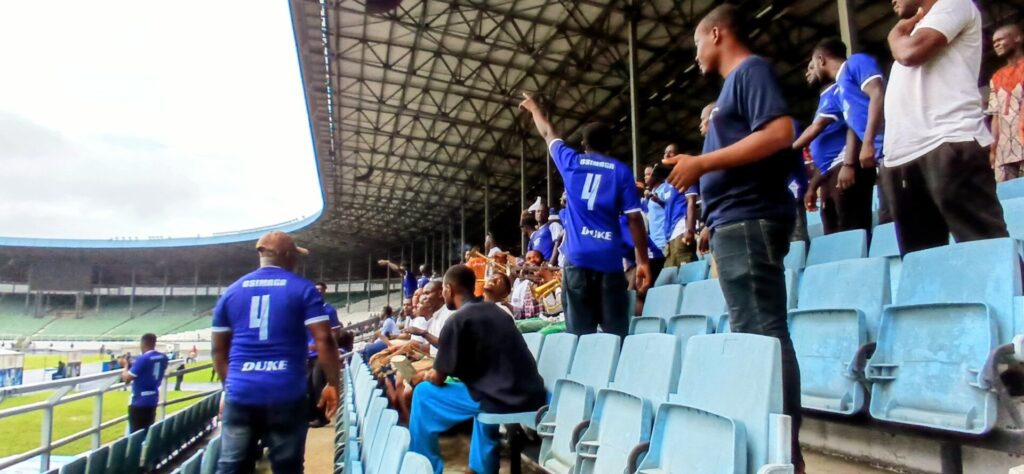
Images: Cover: Football Africa (illustration); Figure 1: ABORISADEADETONA / Wikimedia Commons
How this article was made: Football Africa uses AI tools to structure, format and optimise its articles, and occasionally to produce illustrated covers where no free photograph exists. The reporting these articles are based on is human-produced and cited above. Spotted an error? Write to [email protected] and we will correct it. — The editors How we work.