Must-win in Ikenne, memories of Atlanta: Nigeria’s U‑23 arc meets its next reckoning
6 min read
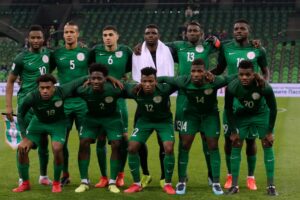
Two goals down and 90 minutes to save a cycle: Nigeria’s Olympic Eagles go into today’s second leg against DR Congo at the Remo Stars Stadium in Ikenne needing a three-goal win to go through or a two-goal margin to force penalties. It is only the second round of 2027 Africa U‑23 Cup of Nations qualifying, but the stakes stretch well beyond this evening — Egypt will host the finals, and that tournament will double as Africa’s road to the men’s football event at the 2028 Los Angeles Olympics.
This is the rung where Nigeria built an identity: three-time Olympic medallists — gold at Atlanta 1996, silver at Beijing 2008, bronze at Rio 2016 — now trying to rejoin a competition they have missed in the last two editions of the Games. The deficit from last Friday’s 2-0 loss in Lubumbashi is the immediate problem; the longer arc of a team that once set the continental standard at this age group is the context for why it matters.
The tie in front of them: deficit, venue, permutations
The math is simple, and unforgiving. DR Congo scored twice in the first half of the first leg at the TP Mazembe Stadium in Lubumbashi, and Nigeria must overturn that 2-0 advantage at home. Complete Sports sets out the permutations clearly: a three-goal victory sends Nigeria through outright; a two-goal win makes it 2-2 on aggregate and the tie will be decided by penalties.
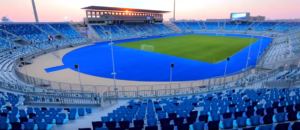
The Remo Stars Stadium in Ikenne hosts the return today, with the Congolese squad having arrived on Sunday and set on protecting their lead. Home advantage is what Nigeria will try to turn into tempo and chances, but the balance is delicate: the same report warns they must produce “an effective attacking display while maintaining defensive discipline” if they are to pull the tie back.
Nigeria’s U‑23 identity was built on medals — and absence has followed
The reference points are non-negotiable, because they are medals. Nigeria’s U‑23s are three-time Olympic football medallists: gold in 1996, silver in 2008, bronze in 2016. Those outcomes are the signposts of a generation-to-generation conveyor that once reliably carried the Olympic Eagles onto global summer stages.
The recent record is the counterweight. Nigeria have missed the last two editions of the Olympic Games in men’s football, and with the 2027 U‑23 AFCON doubling as the route to Los Angeles 2028, a comeback today is a prerequisite to even reach the decisive third qualifying round. That is why a second-round, second-leg game in Ikenne feels heavier than its bracket suggests.
The road to Egypt runs through Ikenne — and then Zambia
Structurally, Nigeria entered this campaign in the second round; DR Congo got here by beating Mauritania 2-1 on aggregate in the opening round. The winner of today’s two-leg tie will face Zambia in the third and final qualifying round for a place at the 2027 U‑23 AFCON finals in Egypt. Only there, at the finals, will Olympic tickets be decided.
There are thin margins even before kick-off. DR Congo arrived in Nigeria on Sunday with a plan to defend what they have; Complete Sports also flagged separately that DR Congo lost their captain Ahoka ahead of the return leg, a note that at minimum frames where their depth will be tested. None of that changes the headline: Nigeria must solve a two-goal problem now, or the path to Egypt — and onwards to LA — closes again.
DR Congo’s first punch landed in Lubumbashi
Last Friday’s first leg in Lubumbashi set the tone and the task. DR Congo scored twice before the interval at the TP Mazembe Stadium to tilt the tie, handing themselves both a cushion and clarity over how to approach the return leg. Nigeria, who took a bye to enter at this stage, were pushed into a position that demands risk at home.
The visitors’ plan is straightforward: protect a two-goal head start and play for territory and duels that burn minutes. Nigeria’s, as articulated by Complete Sports, is to attack smarter without exposing the back line to the transition that punished them last time: “an effective attacking display while maintaining defensive discipline.” In two-legged football, game states dictate posture — the Olympic Eagles will have to create one that makes DR Congo defend longer and deeper in Ikenne than they did in Lubumbashi.
After Rio 2016, the conveyor slowed — this is the restart button
Nigeria’s three medals anchor the story, but the last two Olympic cycles did not include the Olympic Eagles. Absence can be its own feedback loop: when you do not reach the continental U‑23 finals, you do not even get a chance to play for a place at the Games. That is what today’s second leg represents — a binary: keep the route to Egypt open, or close it early again.
No one game defines a development pathway, and Complete Sports does not pretend this one would. But in a qualifying format that compresses jeopardy into a handful of fixtures, Ikenne is where a generation either earns the right to play a final round against Zambia or sees another Olympic cycle end before it properly begins.
The detail
Two legs, one bracket, clear math: what decides this tie and the campaign
This second round is decided over two legs on aggregate. The first leg in Lubumbashi finished 2-0 to DR Congo, with both goals before half-time; Nigeria now need to overturn that at home. Complete Sports is explicit about the permutations: a three-goal Nigeria win advances them without further tiebreaks; a two-goal margin for Nigeria levels the aggregate at 2-2 and sends the contest to a penalty shootout. By implication, there is no away-goal tiebreak being applied in this round per the outlet’s framing, so thinking in pure aggregate becomes the tactical baseline.
Zooming out, Nigeria entered at the second round by virtue of a bye. DR Congo had already cleared one hurdle, eliminating Mauritania 2-1 on aggregate in the opening round to reach this stage. The bracket is short: win here and the Olympic Eagles meet Zambia in the third and final qualifying round; lose and the route ends before the finals. The 2027 U‑23 AFCON itself will be staged in Egypt and will serve as Africa’s qualifying tournament for the men’s football event at the 2028 Los Angeles Olympic Games. Every decision in Ikenne is made against that calendar — and the knowledge that there is no group-stage safety net in this phase.
| Year | Medal |
|---|---|
| 1996 | Gold |
| 2008 | Silver |
| 2016 | Bronze |
What a comeback would unlock
Beat DR Congo by the required margin and there is one more hurdle: Zambia in the third and final qualifying round. That is the immediate prize on offer tonight — permission to plan for a definitive tie and a shot at the finals in Egypt, where Olympic places will be contested. It would also break a pattern: Nigeria have not been at the last two Olympic Games, and turning this tie would move the Olympic Eagles from memory back into motion.
Momentum matters in short campaigns. A swing from a two-goal deficit to progress would be a living example for a young group of how quickly fortunes can change in two-legged football. The reputational effect is real, too: it refocuses discussion on fixtures ahead, not cycles already missed.
If it goes wrong, the price is another cycle on the outside
Defeat tonight would end Nigeria’s 2027 U‑23 AFCON route at the second round and keep them off the path to Los Angeles 2028. That would extend a recent pattern of absence; Complete Sports underscores that the country missed the last two editions of the Olympic Games in men’s football. For a programme that measures itself against 1996, 2008 and 2016, that gap would lengthen further.
There will be other youth tournaments and other age groups, but the U‑23s carry a specific weight because the finals in Egypt are directly tied to the Olympics. In Ikenne, the equation could not be plainer: solve a two-goal problem against DR Congo, earn a shot at Zambia, and keep the Olympic conversation alive — or reset again, from the outside looking in.
Sources: 2027 U-23 AFCONQ: Olympic Eagles Eye Comeback Against DR Congo (www.completesports.com)
Images: Cover: Football Africa (illustration)
How this article was made: Football Africa uses AI tools to structure, format and optimise its articles, and occasionally to produce illustrated covers where no free photograph exists. The reporting these articles are based on is human-produced and cited above. Spotted an error? Write to [email protected] and we will correct it. — The editors How we work.