Clean sheets to a continental crown: how Mdaka’s juniors reset South Africa’s pathway
7 min read
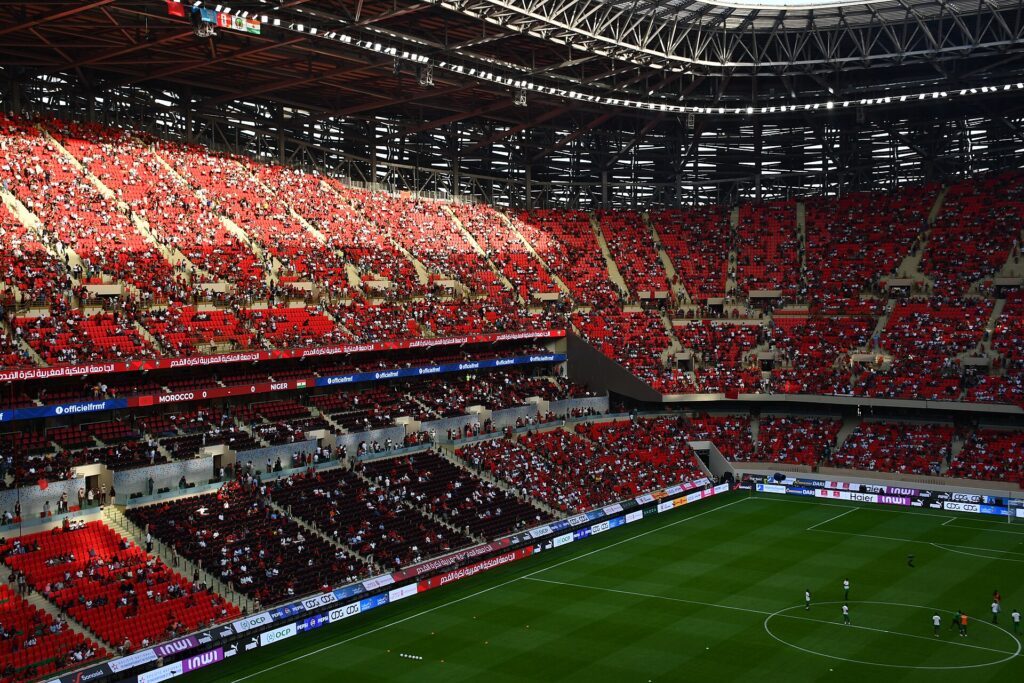
A winning goal in Morocco put a generation on the map. South Africa’s U23s, assembled by Raymond Mdaka in 2024, stunned the continent by winning the Africa Cup of Nations at U23 level, with Mamelodi Sundowns midfielder Gomolemo Kekana striking the decisive blow in the final in Morocco.
That moment did not happen in isolation. It sat on top of an unbeaten COSAFA Cup where the side did not concede a goal, and a U20 core that had already banked the pressure-learning of a FIFA U20 World Cup round of 16 the year before. The through-line, as Kekana puts it, is cohesion: “This is a group that started… in 2024,” and “the relationship and camaraderie within all the players and coaching staff is very good.”
The first proof: COSAFA without a blemish
Mdaka’s rebuild showed its steel early. After being put together in 2024, South Africa’s U23s went through the COSAFA Cup unbeaten and without conceding a single goal. For a youth side finding itself, that is a hard-edged calling card.
The numbers matter because they travel. Clean sheets and the habit of closing games fed a winning habit that carried into continental company. That COSAFA run was the first shared memory bank of a group that would stay together and rise together through the next two years, setting standards for the rest of the cycle.
From U20 experience to U23 payoff
Sixteen of the 23 players who lifted the U23 continental title had already worn South Africa’s U20 shirt, according to Kekana. That is an unusual degree of continuity at youth level, and it showed in how quickly the U23s played like a team that had already lived through tournament jeopardy together.
Crucially, the U20s had progressed to the round of 16 at the FIFA U20 World Cup the previous year. That was not a trophy, but it was time in the furnace — travel, tournament rhythm, knockout pressure — that does not come often enough for South African age-group sides. Names like Lazola Maku and Tylon Smith were part of that driving force alongside Kekana, and the benefit of that banked experience is visible in the outcomes that followed.
Morocco: a final settled by a midfielder with a point to prove
The continental title arrived in Morocco, and the image that lasts is Kekana scoring the winner in the final. For all the collective work, finals are decided by moments, and the midfielder’s intervention capped a campaign that, in his words, was years in the making.
“Most definitely, this is a group that started… in 2024,” Kekana said, pointing to a bond formed across age-bands and competitions. Winning in Morocco did not just add a medal; it established this cohort as the standard-bearers for South African youth football, proving that the COSAFA foundation and U20 mileage could translate on the biggest African stage.
A pipeline built on familiarity, not hype
The simplest, most durable part of this resurgence is also the least glamorous: time spent together. When 16 of 23 champions have already come through U20 together, you are not introducing principles at U23 level, you are reinforcing them. That is the pipeline in action — not a one-off talent, but a group that knows the drills, the standards and the stakes.
That is why the current U23s talk openly about more to come. They are “a good group that can do wonderful things in the future,” says Kekana, framing the 2028 Olympic Games as the next waypoint. Even without naming future Bafana caps or projecting senior roles, the logic is straightforward: tournament seasons layered year-on-year make players readier for the next badge and the next anthem.
Two legs, four goals, and the next test: Cameroon
The first checkpoint on the road to Los Angeles is already moving. South Africa progressed past Madagascar with a 4-2 aggregate score — a 1-0 win in the first leg and a 3-2 triumph in the second — to book Cameroon in the next round of Olympic Games Qualifiers.
That is the kind of tie where experience from COSAFA and a U20 World Cup round of 16 helps. You manage away legs, you ration risk, you handle the emotional turbulence of a second leg with the job still in the balance. If the group is to keep, in Kekana’s words, “defying the odds,” Cameroon is the latest proof-of-concept assignment.
The detail
The cohort carryover by the numbers
The headline metric in South Africa’s youth reset is blunt: 16 of 23 U23 champions passed through the U20s. That concentration of carryover is not a trivia nugget; it is a structural advantage in international youth football, where contact time is compressed and tactical scaffolding can fray under turnover. When players move up as a pack, the language is shared — defensive cues, set-piece roles, late-game behaviours — and the variance that usually comes with every new camp is flattened. It showed across their cycle: assembled in 2024, the group’s first collective success arrived with an unbeaten, goals-against-zero COSAFA Cup; a year later, many of the same faces had the U20 World Cup’s knockout-stage stimulus in their legs; then the U23s claimed Africa in Morocco with Kekana’s winner. You can map the rhythm: immediate defensive resilience, tournament jeopardy absorbed, silverware sealed. The same cadence now underpins their Olympic qualifying push after a 4-2 aggregate past Madagascar and a date with Cameroon.
| Milestone | What the record shows |
|---|---|
| Squad assembly | Core U23 group assembled by Raymond Mdaka in 2024 |
| COSAFA Cup | Won the tournament unbeaten, without conceding a goal |
| Continental title | U23 Africa Cup of Nations won in Morocco; winner scored by Gomolemo Kekana |
| U20 World Cup | South Africa U20 progressed to the round of 16 the previous year |
| Squad continuity | 16 of the 23 U23 champions had U20 experience |
| Olympic Qualifiers | Beat Madagascar 4–2 on aggregate (1–0 first leg, 3–2 second) to face Cameroon next |
Names and roles: who drove it and why it matters
Kekana’s contribution is incontestable: a winner in a continental final is the currency that lasts. He was also, as iDiski Times describes it, “a major driving force in the squad alongside Lazola Maku [and] Tylon Smith.” Those are not household names yet, but at youth level they were the engines of a run that married COSAFA control with a climactic title in Morocco.
This matters for the next layer because South Africa’s youth teams have set a standard for how to move as a unit. Kekana speaks repeatedly about “relationship and camaraderie,” and there is no mystery to that: it is the everyday chemistry that shows up in knockout minutes. Whether these players climb to Bafana in step will be decided by club form and selection battles — unknowns today — but the feeder line exists and, more importantly, works.
What was learned, and what was left behind
Three takeaways from this cycle are anchored in the record. First, the COSAFA Cup can be more than a tune-up; it can be a standard-setter when used to weld a new group together. Second, the leap from U20 to U23 is softer when a cohort ascends together — 16 of 23 is a striking carryover — and when that U20 class has tasted the round of 16 at a FIFA World Cup. Third, winning on the continent validates the process in a way nothing else does.
What is not in the record, and therefore not ours to pretend, are the finer-grain tactical blueprints or a list of senior breakthroughs to date. The value here is not a nostalgic gloss but the sequence of results themselves. Those results have put this group on a path towards the 2028 Olympic Games and placed another real test — Cameroon — in front of them, with the knowledge that they have closed big assignments before.
What comes next: Cameroon, then the long road to 2028
South Africa’s junior arc now runs through the Olympic route. Having taken Madagascar 4-2 across two legs, beating them 1-0 and 3-2, they will face Cameroon next with a shot to stay on schedule for Los Angeles 2028. The margins tighten from here, but the outcomes to date support their internal confidence.
“I really think we have a good group that can do wonderful things in the future,” Kekana said. If the last two years are the guide — COSAFA perfection, a U20 World Cup knockout berth, and a U23 title in Morocco — there is a method underpinning the ambition. The pipeline does not need promises; it has milestones. The next one wears green, red and yellow.
Sources: Kekana Makes Bold Prediction Over Talented SA U23s (idiskitimes.co.za)
Images: Cover: Football Africa (illustration); Figure 1: Reda benkhadra / Wikimedia Commons (CC BY-SA 4.0)
How this article was made: Football Africa uses AI tools to structure, format and optimise its articles, and occasionally to produce illustrated covers where no free photograph exists. The reporting these articles are based on is human-produced and cited above. Spotted an error? Write to [email protected] and we will correct it. — The editors How we work.