How CAS can strip or restore an AFCON title
7 min read
Ninety minutes became ten months. The 2025 Africa Cup of Nations final in Rabat ended with Senegal lifting the trophy after extra time, but the title was later reassigned to Morocco on a 3-0 forfeit. On Tuesday afternoon, the Court of Arbitration for Sport (CAS) will decide whether that switch stands or Senegal’s win is restored.
CAS’s verdict follows a closed-door hearing in Lausanne on 8 October. The appeal turns on one word that football rarely has to parse in a courtroom: abandonment — who can declare it, what the CAF rule actually says, and what the sanctions must be when players leave the field before the final whistle.
The flashpoint in Rabat — and the regulatory trigger
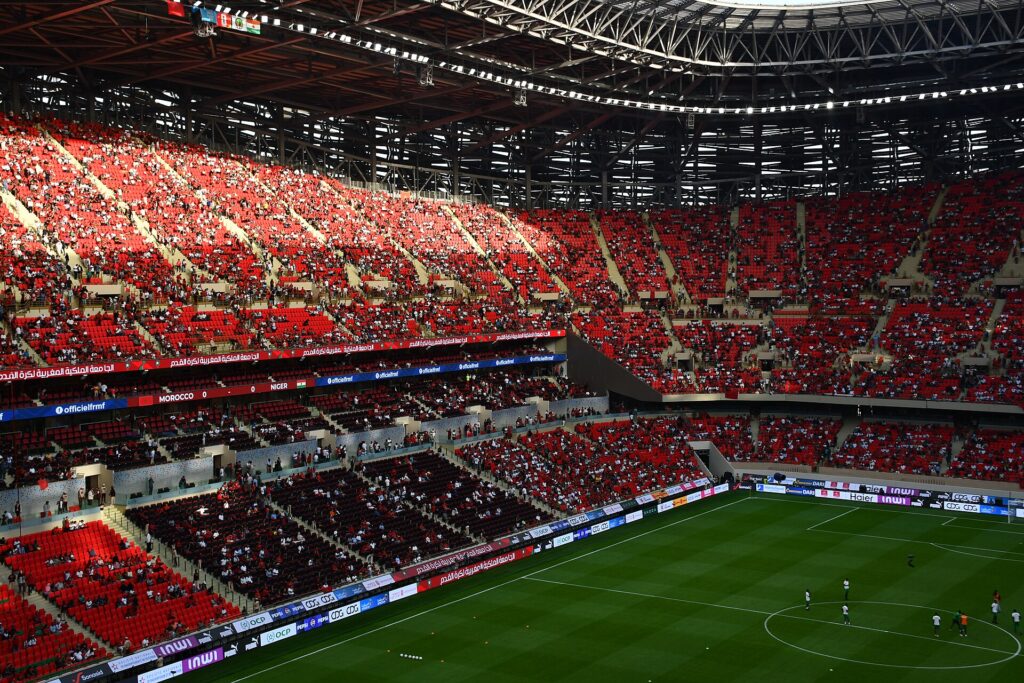
With 66,000 inside the Prince Moulay Abdellah Stadium, the final descended into chaos deep in stoppage time. Senegal thought Ismaila Sarr had won it, only to find referee Jean Jacques Ndala had whistled for a Morocco free-kick. After a VAR review, he then awarded Morocco a penalty in the 98th minute. Touchlines and stands boiled; Senegal coach Pape Thiaw led some players and staff down the tunnel as clashes flared in the crowd.
Play eventually resumed. In the 124th minute, Brahim Diaz’s Panenka-style penalty was saved by Edouard Mendy before Pape Gueye struck in extra time to seal a 1-0 win for Senegal. The Royal Moroccan Football Federation (FMRF) immediately complained to CAF, pointing to Article 82 in the “Withdrawals” chapter: if a team refuses to play or leaves the ground before the regular end without the referee’s authorisation, it is considered the loser and eliminated. In March, a CAF appeals board applied that article, declaring a Senegal forfeit and awarding Morocco a 3-0 victory.
Who decides what: referee, CAF and CAS
One central dispute is jurisdiction on the day versus after it. As former CAF voices argued, only the referee has the authority to abandon a match if a walk-off occurs. The Moroccan complaint, and CAF’s appeals board ruling, hinged on Article 82’s automatic sanction when a team leaves the field without permission — even if play later resumes. That tension is what CAS has been asked to resolve.
Founded in 1984 and based in Lausanne, CAS is an independent tribunal recognised by sporting bodies worldwide. For those who accept its authority — and CAF’s president Patrice Motsepe has said the confederation will “adhere to” and “respect” whatever CAS decides — its award is effectively final, save for rare interventions by Switzerland’s highest court on narrow technical grounds. Senegal’s appeal was heard in private by a three-arbitrator panel led by French scholar Gérald Simon, with Luigi Fumagalli and Ulrich Haas completing the trio. If the panel could not reach consensus, Simon, as president of the panel, would issue the final decision.
What ‘abandonment’ means in CAF rules — and what changed after January
Article 82’s key sentence is stark: “If, for any reason whatsoever, a team… refuses to play or leaves the ground before the regular end of the match without the authorisation of the referee,” that team shall be considered the loser and eliminated. Morocco argued Senegal’s touchline exodus met that test. Senegal’s federation (FSF) called the ruling “unfair, unprecedented and unacceptable,” maintaining the match was not abandoned and was completed on the pitch.
The fallout has already influenced the laws of the game. In April, the International Football Association Board (Ifab) clarified that “the referee may sanction with a red card any player who leaves the field of play in protest at a referee’s decision,” extending the same to officials who incite a walk-off, and stating that “a team that causes a match to be abandoned will, in principle, forfeit the match.” Whatever CAS decides, that post-Rabat guidance will shape how future incidents are handled.
CAF’s March decision — what it did and why a reversal would sting
CAF’s appeals board reached its verdict in March: it ruled that Senegal had forfeited under Article 82 and awarded Morocco a 3-0 victory. Although the appeals board is independent, the decision has been heavily criticised for retrospectively handing the title to the hosts. A reversal now would be another reputational blow, as BBC Sport notes, to an organisation already under scrutiny for that decision.
Motsepe’s line in March was clear — CAF will accept whatever CAS rules. That could mean somebody at Cairo headquarters “having to tinker with the Afcon rulebook” if Senegal’s appeal succeeds. It would also settle, at least legally, a fierce argument between two of Africa’s strongest federations: the FMRF, which says it only seeks proper application of the regulations, and the FSF, which says the punishment did not fit the facts of what unfolded in Rabat.
The legal road and the clock: from January to Tuesday afternoon
The match chaos happened in January 2025 in Rabat. CAF’s appeals board announced its forfeiture ruling in March. CAS then received Senegal’s appeal and convened a private hearing at its Lausanne headquarters on 8 October before announcing that the final award would be issued on Tuesday.
CAS handles more than 900 cases a year across scores of sports — from transfer disputes to event organisation. This one was assigned to a panel chaired by Gérald Simon, with Luigi Fumagalli and Ulrich Haas as co-arbitrators. CAS’s decision is due on Tuesday afternoon and will be binding on the parties, with only a very slim chance of any further recourse at Switzerland’s top court on procedural or jurisdictional technicalities.
What each verdict would change — records, money, discipline
If CAS upholds CAF’s March ruling, Morocco remain champions on a 3-0 forfeit and Senegal’s walk-off is, in regulatory terms, the decisive act of the final. If CAS restores Senegal’s win, the trophy returns to the team that finished 1-0 ahead on the pitch. In either case, the record — which country is listed as 2025 AFCON winner, and the final scoreline attached to it — will be settled by Tuesday’s award.
Prize money is not set out in the available reporting, but that recognition of the winner would logically govern any distribution; the sources do not give the figures or the administrative steps. Disciplinary implications are clearer for the future: Ifab’s April clarification empowers referees to send off players and punish officials for protest walk-offs and makes forfeiture the principle when a team causes abandonment. That guidance sits alongside the Article 82 framework that underpinned the March decision.
The detail
Abandonment, authority and the post-Rabat law change
The knot CAS must unpick lies between two strands: Article 82’s automatic sanction if a team “refuses to play or leaves the ground… without the authorisation of the referee,” and the long‑standing view that only the referee can abandon a match. In Rabat, Senegal’s bench and some players did leave the field in protest before returning to finish extra time, which is why CAF’s appeals board read Article 82 as triggered and imposed a 3‑0 forfeit. The counter‑argument is that because Ndala did not abandon the final — play resumed and ended on the pitch — the condition precedent for declaring a forfeit under “Withdrawals” was never actually met.
IFAB’s April update adds a new layer going forward. It explicitly authorises red cards for walk‑offs in protest and states that a team that causes a match to be abandoned will, in principle, forfeit. That does not retrospectively decide Rabat, but it narrows future ambiguity for referees and organisers alike: a walk‑off can be sanctioned in real time, and if it escalates to abandonment, the match is, in principle, lost by default. CAS’s reading of Article 82 against that background will define the 2025 final in law.

Why it matters beyond this verdict
The stakes are not only legal. BBC Sport reports that animosity is likely to linger between the FMRF and FSF, with Morocco’s hierarchy furious at scenes they believe tarnished a landmark hosting and Senegal leaning into a wider feeling that Morocco holds too much sway in African football. Sadio Mané being named player of the tournament underscored how much was at stake for the Teranga Lions beyond the glass.
There were flashpoints around the spectacle — laser pens aimed at players, ball boys moving Edouard Mendy’s towel and a scuffle when reserve keeper Yehvann Diouf intervened — that hardened perceptions on both sides. Whatever CAS rules, the lesson everyone agrees on is simple: finals should be settled on the pitch, not in courtrooms. With the next AFCON scheduled for June and July next year, a rematch between two outstanding teams is already a tantalising prospect.
Sources: Senegal: Verdict On Senegal Afcon Title Appeal On Tuesday – CAS (allafrica.com); Morocco and Senegal await Afcon final verdict after court case (feeds.bbci.co.uk)
Images: Cover: Fanny Schertzer / Wikimedia Commons (CC BY 3.0); Figure 1: Fanny Schertzer / Wikimedia Commons (CC BY 3.0); Figure 2: Reda benkhadra / Wikimedia Commons (CC BY-SA 4.0)
How this article was made: Football Africa uses AI tools to structure, format and optimise its articles, and occasionally to produce illustrated covers where no free photograph exists. The reporting these articles are based on is human-produced and cited above. Spotted an error? Write to [email protected] and we will correct it. — The editors How we work.