From red ink to record purses: inside CAF’s $31.2m turnaround
7 min read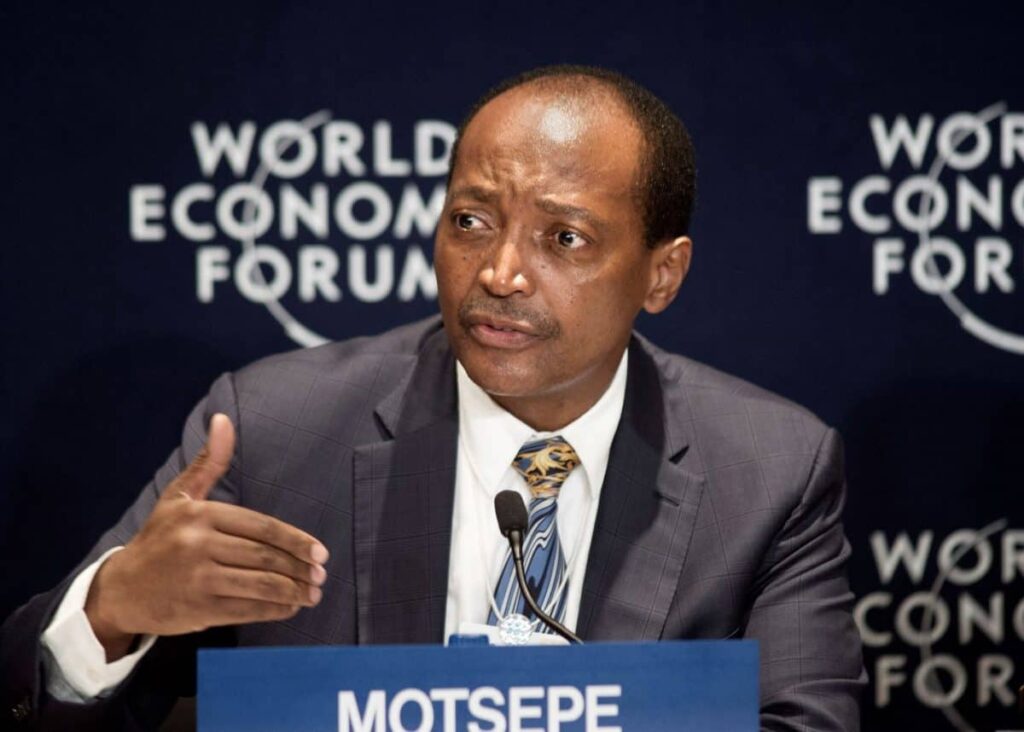
Thirty-one point two million dollars. That was the headline number in Abuja on 21 November 2026, when CAF presented its latest accounts to the 48th Ordinary General Assembly and confirmed the confederation had returned to profit. Total revenue reached $284 million — more than triple the earlier baseline — while reserves swung from a $16.8 million deficit to a $14.4 million positive balance and cash on hand stood at $118.8 million at the June 2026 year-end.
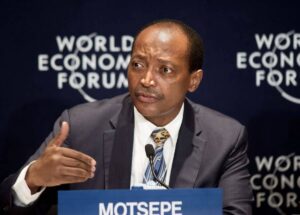
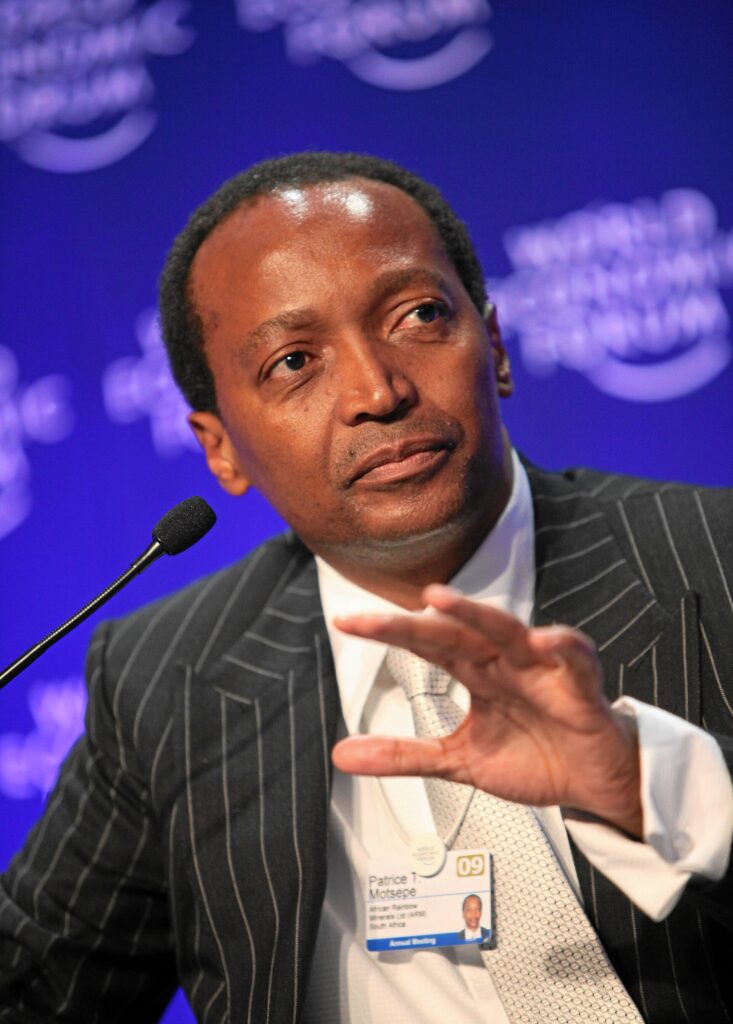
For an organisation that, five years ago, was reportedly saddled with more than $100 million in debts, the contrast is stark. CAF has credited a turnaround programme launched in 2021 under President Patrice Motsepe for the shift toward “financial independence and long-term sustainability,” and the knock-on is already visible: from bigger allocations to member associations and zones to markedly higher prize purses across club and national-team competitions.
Abuja 2026 marked the close of a backlog era
The setting mattered because the message was as much about governance as it was about profit. CAF told delegates in Abuja it had tackled a decade-long backlog in timely financial reporting, presenting two sets of accounts in 2026 as part of a reset toward transparency and stronger financial management. After years of concerns around late or incomplete reporting, the emphasis was on improved transparency, accountability and financial management.
That process gives the headline figures their real weight. A positive reserve position of $14.4 million in June 2026, with cash at $118.8 million, is not a one-off windfall when it sits alongside on-time audits and disclosure. It signals a balance sheet able to underwrite commitments rather than scramble to meet them late — and explains how CAF could move quickly to raise allocations and prize money without compromising solvency.
The 2021 reset and a revenue engine that tripled
The organisation’s framing is clear: 2021 was the hinge year. A formal turnaround programme began then, and by 2026 CAF could tell its members that revenue had climbed to $284 million, “up more than 200 per cent.” While the precise base number is not detailed, the scale of growth underpins the rest of the changes: the move back to profit, the rebuilding of reserves, and the liquidity that shows as $118.8 million in cash at year-end.
The stated aim of the reset was not only survival but independence — the ability to pay for development, competitions and administration from a stable commercial base. CAF says the recovery has “allowed” greater investment across the map: more funding for its 54 member associations, increased grants to the six zonal unions, deeper support for club competitions, and materially higher prize money for AFCON and WAFCON. The budget lines tell the story better than any slogan.
Member associations and zones: the base funding gets thicker
Since 2021, the annual subvention to each of the 54 member associations has risen by 250 per cent, from $200,000 to $700,000. CAF says the newest uplift took effect in July 2026 and places it 70 per cent of the way toward a previously stated target of $1 million per MA per year. The intended use-cases are basic but decisive: grassroots football, administration and governance capacity, youth pathways and the women’s game.
The six zonal unions have also seen an 80 per cent increase in their allocations over the period, from $500,000 in 2021 to $900,000 in 2026. Zones are where many development tournaments and qualifying events are staged; a healthier line item here means more predictable calendars and better staging conditions. It is the plumbing of the game — often invisible until it fails — getting overdue attention in hard numbers.
Club competitions: solidarity doubled, winners’ cheques transformed
CAF’s interclub competitions have received a corresponding financial jolt. Total funding for clubs has risen by 153 per cent in five years, from $19 million in 2021 to $48 million in 2026. The winners’ cheques tell the same tale in shorthand: the CAF Champions League title now pays $6 million, up from $2.5 million in 2021, while the CAF Confederation Cup winner takes home $4 million, up from $1.25 million.
The total prize purse has been expanded, not just top-heavy. The Champions League pot now stands at $19.6 million and the Confederation Cup at $11.9 million. CAF has also doubled solidarity for clubs knocked out in the preliminary rounds from $50,000 to $100,000 per club — money that, for many champions of smaller leagues, can cover continental travel and keep domestic programmes intact.
These changes matter because continental football is expensive long before a group-stage ball is kicked. The combination of larger top prizes and stronger early-round solidarity changes the risk calculus for club executives contemplating squad investment, longer campaigns and cross-border logistics. It makes participation less punitive and success more transformative.
AFCON and WAFCON: record purses and a bigger women’s field
The national-team side has seen equally visible shifts. At AFCON Morocco 2025, the champions received a record $10 million — double the $5 million paid to the winners of the 2021 edition — and the overall tournament purse climbed by more than 40 per cent from $24.8 million in 2021 to $35 million in 2025. For federations, that differential filters into high-performance planning and debt servicing alike.
Women’s football, too, has moved from symbolic rewards to meaningful sums. The CAF Women’s Africa Cup of Nations Morocco 2026 paid $2 million to the champions, a 900 per cent leap from the $200,000 figure in 2021. The overall WAFCON prize fund grew from $975,000 in 2021 to $5.8 million in 2026, and the tournament field expanded from 12 to 16 teams, opening a pathway to the elite stage for four additional national sides.
One link ties the increases together: revenue headroom created by the broader turnaround. CAF’s assertion is straightforward — profitability and cash strength give it room to raise prize money — and the progression across both men’s and women’s tournaments is the proof-of-concept. For the women’s game in particular, the shift in zeros changes what federations can justify investing at home.
The detail
How the disbursement ladders changed, line by line
The most consequential mechanism in the Motsepe-era numbers is the reweighting across three ladders at once: MAs and zones (the base layer), club competitions (the professional ecosystem), and flagship national-team tournaments (the prestige economy). On the base layer, MAs moved from $200,000 to $700,000 per year since 2021 — a 250% increase now representing 70% progress toward a $1m target per MA — while zones moved from $500,000 to $900,000. That stabilises calendars and administration where costs are fixed and revenues are not. In the club game, total club funding rose from $19m (2021) to $48m (2026), with the Champions League winner’s cheque jumping from $2.5m to $6m and the Confederation Cup from $1.25m to $4m. Crucially, preliminary-round solidarity doubled from $50,000 to $100,000, reducing the cash-flow shock for clubs exiting early. At the prestige end, AFCON’s overall purse rose from $24.8m (2021) to $35m (2025) with the winner’s prize doubled to $10m, while WAFCON’s total fund increased from $975,000 (2021) to $5.8m (2026) and the winner’s prize from $200,000 to $2m, alongside expansion from 12 to 16 teams. All of it is underwritten by 2026 revenue of $284m, a >200% rise that converts to a $31.2m net profit, positive reserves of $14.4m and $118.8m in cash at year-end.
What stronger books change on the ground
The human meaning of a $31.2 million surplus shows up in small budgets and big ambitions. A federation planning youth camps or women’s league grants can do so against a guaranteed $700,000 annual cheque rather than a $200,000 one. A club eyeing a continental run can model cash flows knowing early elimination still carries $100,000 in solidarity and that the upside for a deep run is materially higher than five years ago.
CAF frames these decisions as investments “to improve football development structures and expand opportunities across Africa,” and the alignment is consistent: more money to MAs and zones for structures, more money to clubs and national teams for performance. The difference in 2026 is that this is articulated against audited, current accounts rather than promises. That credibility is difficult to price but essential to maintaining sponsors and broadcasters who fuel the $284 million top line.
Why the 2026 balance sheet matters for sustainability
Beyond the one-year profit, the reserves figure is the litmus test. Moving from a $16.8 million deficit to a positive $14.4 million balance signals that CAF can absorb shocks without immediately raiding competition budgets. Likewise, a cash position of $118.8 million at the end of the financial year in June 2026 is working capital that avoids the short-term borrowing costs which erode development money in less disciplined accounting cycles.
With profitability restored, stronger reserves and more investment into competitions and members, CAF believes it is now in a stronger position to support the continued growth of African football. By linking efforts to address a decade-long reporting backlog — including presenting two sets of accounts in 2026 — to targeted uplifts, the confederation is pursuing improved transparency, accountability and financial management.
The road ahead: targets, ceilings and the next test of nerve
The immediate waypoint is written into CAF’s own targets: $1 million per MA annually. At $700,000 as of July 2026, the confederation says it is 70 per cent of the way there. Sustaining the current revenue level — $284 million in 2026 — while keeping reserves in the black would allow those base allocations and prize purses to hold or grow without destabilising the books.
The broader question is execution. The 2026 figures show the room to keep investing: Champions League and Confederation Cup purses that reward ambition, solidarity that lowers barriers to entry, AFCON prize money that feeds high-performance budgets, and a WAFCON structure big enough, and rich enough, to pull more countries into serious planning. If the reporting cadence stays timely and the surplus stops being an exception, the rest of African football can plan seasons and cycles with fewer contingencies.

Sources: CAF records $31.2 million profit as Motsepe’s reforms drive financial turnaround (www.premiumtimesng.com)
Images: Cover: CGZ G3N3 / Wikimedia Commons (CC BY-SA 4.0); Figure 1: Copyright by World Economic Forum swiss-image.ch/Photo by Monika Flueckiger / Wikimedia Commons (CC BY-SA 2.0); Figure 2: mustapha_ennaimi / Wikimedia Commons (CC BY 2.0)
How this article was made: Football Africa uses AI tools to structure, format and optimise its articles, and occasionally to produce illustrated covers where no free photograph exists. The reporting these articles are based on is human-produced and cited above. Spotted an error? Write to [email protected] and we will correct it. — The editors How we work.