Pitso again: from Bafana’s first rebuild to three African crowns, and why South Africa called now
7 min read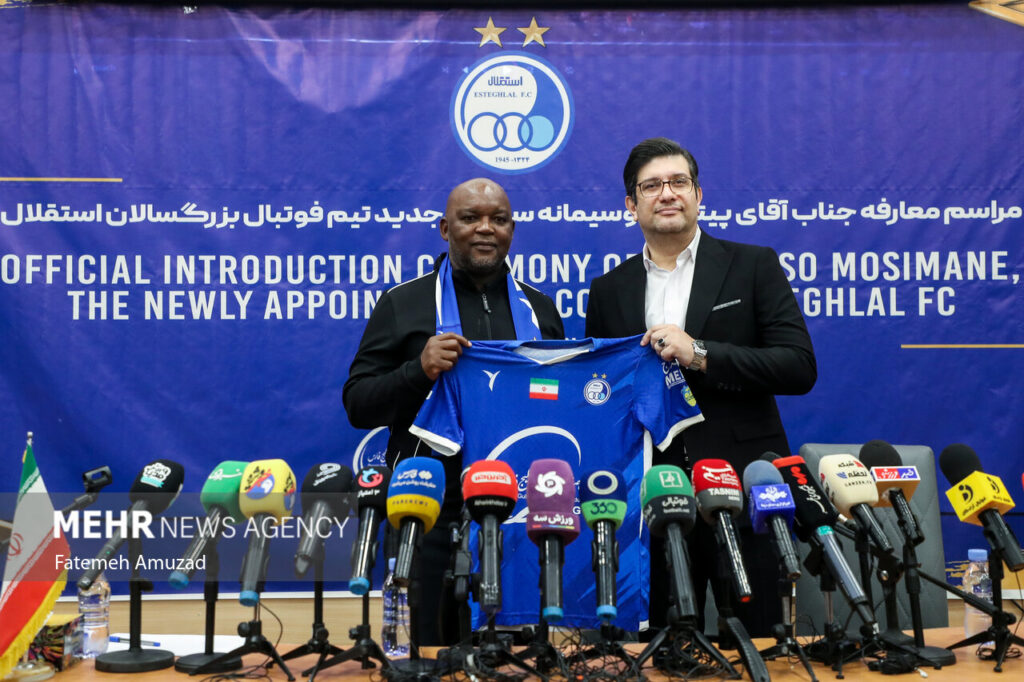
The detail that still stings is simple: a draw that wasn’t enough. In his first full spell as Bafana Bafana coach, Pitso Mosimane’s South Africa failed to reach the 2012 Africa Cup of Nations after mistakenly believing a point against Sierra Leone would secure qualification. Four months later, a 1-1 home draw with Ethiopia opened the 2014 World Cup campaign and closed Mosimane’s tenure in June 2012.
Fourteen years on from that rebuild, South Africa have turned back to the most decorated club coach the country has produced. The South African Football Association (SAFA) approved Mosimane’s return on 8 August and unveiled him in Johannesburg on Tuesday, ahead of AFCON 2027 qualifying later this month. It’s a pragmatic choice under time pressure: two September fixtures begin a group in which co-hosts Kenya automatically qualify, so only one other team can advance.
The first Bafana project and the misread that defined it
Mosimane’s national-team story began before 2010. As AllAfrica reports, he first led Bafana in a seven-game interim stint in 2007, ahead of Carlos Alberto Parreira’s arrival, then returned for a longer spell after the 2010 FIFA World Cup. That second tenure ran from July 2010 to June 2012, the bracket in which the infamous qualification miscalculation occurred.
The hard facts are on the record. South Africa did not reach the 2012 AFCON after mistakenly believing a draw in their final group game against Sierra Leone would be enough to qualify, as the BBC recounts. And when the next cycle started with a 1-1 home draw against Ethiopia in their first 2014 World Cup qualifier, Mosimane parted company with Bafana later that June.
Across his national-team stints to date, AllAfrica totals his Bafana record at 23 games: nine wins, 10 draws and four defeats, with his sides scoring 17 and conceding just eight. It is a ledger that places the misread and the Ethiopia draw within a broader picture: few losses, a frugal defence, and too many stalemates to reach tournaments when margins were thin.
From club benches to Africa’s summit
The intervening years changed Mosimane’s profile. The BBC notes he “enjoyed club success with Sundowns and Egyptian giants Al Ahly, winning the African Champions League three times.” AllAfrica places that haul second only to Manuel José’s four on the continental roll of honour. That is the core of the case for his return: few African coaches can point to that breadth of interclub achievement.
More recently he stepped outside the Southern and North African corridors that defined those triumphs. The BBC lists spells in Saudi Arabia, Abu Dhabi and Iran, with Esteghlal his most recent job before the Bafana recall. Whatever comes next, Mosimane returns a different coach than the one who left: one with a pan-continental CV and a Champions League pedigree validated in different environments.
Why SAFA turned back now
Timing and track record intersected. Hugo Broos, who led South Africa to third place at AFCON 2023 and into the last 32 of the 2026 World Cup—their first finals since hosting in 2010—stepped down when his contract expired at the end of July, according to the BBC. With AFCON 2027 qualifiers starting “later this month,” as AllAfrica puts it, SAFA had little room to opt for a long bedding-in period.
Mosimane’s unveiling on Tuesday followed the executive committee’s 8 August approval and the finalisation of his contract and technical team, per the BBC. He framed the moment in the terms SAFA will have weighed. “I have been given the privilege of leading our national team again,” he told reporters in Johannesburg, via AllAfrica. “I know this is simply not a coaching job; it is bigger than Pitso Mosimane… With pride and determination, I accept the challenge.”
In purely football terms, a coach with three CAF Champions League titles and a national-team record that has conceded only eight goals in 23 games offers a strong risk profile for a group where one slip could be terminal. He also knows the pressure contours of the Bafana job—its political attention and expectation ecology—which often counts as much as tactics when qualification windows are short.
What the numbers say about Bafana under Mosimane
The AllAfrica ledger reads conservatively efficient. Nine wins from 23 is modest, but four defeats in that span and only eight goals conceded suggest teams difficult to beat. Set against the memory of the 2012 AFCON miss, it underlines the difference between being competitive and being clinical in qualification football.
The draw column—10 in total—is the cautionary tale that follows him back into camp. In a group trimmed by an automatically qualified co-host, protecting leads and turning parity into points will matter more than aesthetic rebuilds. Mosimane’s own words—“I understand the weight of this role, the expectations that come with it”—frame that trade-off.
| Category | Number |
|---|---|
| Games | 23 |
| Wins | 9 |
| Draws | 10 |
| Defeats | 4 |
| Goals For | 17 |
| Goals Against | 8 |
The group and the margin: Guinea at home, Eritrea in Egypt
AllAfrica confirms Bafana open with a home qualifier against Guinea later this month, then travel to neutral Egypt to face Eritrea. They are drawn in Group D with co-hosts Kenya—coached by another South African, Benni McCarthy—who automatically qualify for the 24-team finals. As a result, only one other side from the pool will advance.
That single slot compresses risk. Against Guinea at home the expectation is immediate points; versus Eritrea on a neutral field, it is control of variables: travel, acclimatisation, game management. SAFA’s line that Mosimane “will have to get to work immediately,” as AllAfrica phrases it, is not rhetoric—it is the calendar.
The detail
AFCON 2027 qualifying, trimmed to one slot
Group D’s structure matters as much as its membership. With Kenya in as co-hosts, the traditional two-berth comfort of AFCON qualifying narrows to a one-ticket race among the remaining teams. That changes the arithmetic: head-to-head outcomes aren’t just six-pointers; they are effectively eliminators spread across four or six matchdays, depending on the calendar. AllAfrica’s schedule marker—Guinea at home, then Eritrea on neutral ground in Egypt later this month—front-loads variability into Bafana’s start. A neutral venue strips some of the away-day advantage from Eritrea but also denies South Africa some of the typical host’s edges in conditioning and crowd management.
In this context, the historic profile AllAfrica and the BBC outline—a coach with only four losses in 23 Bafana games and just eight goals conceded across those matches—becomes more than trivia. It points to a template SAFA can plausibly bank on in high-leverage, low-margin qualifiers: reduce concession risk, value clean-sheet equity, and squeeze moments in even games. Nothing in the sources specifies Mosimane’s tactical preferences, but the record allows one clear inference: in a trimmed group, limiting defeats is a structural advantage. Wins will decide the group, but not losing the early fixtures keeps the door open for when the schedule swings back to home soil.
From the archive: the lesson that travelled
The Sierra Leone misread sits awkwardly beside the Champions League medals that followed, but it is part of the same career arc. The BBC’s account of that 2012 qualifying failure—and of the Ethiopia draw that ended his first full spell—frames why his language now stresses responsibility. “It is bigger than Pitso Mosimane… I understand the weight of this role,” he said on Tuesday, via AllAfrica.
AllAfrica’s placement of him behind only Manuel José on the continent’s interclub honours list is the counterweight: a practitioner who has won at the highest level in Africa and has worked in Saudi Arabia, Abu Dhabi and Iran, per the BBC, returns to a job that once exposed his margins. In a South African coaching landscape where international credibility is hard-earned, that duality is the point: the national-team seat tests not just competence but judgment under qualification pressure.
The fixtures that start the verdict
Two games will set tone and table. Guinea at home later this month is the first check on how quickly Mosimane and his newly finalised technical team, per the BBC, can translate ideas into selection and structure. Then comes Eritrea in neutral Egypt, an assignment AllAfrica’s report makes clear will require logistics and focus as much as a game plan.
Kenya’s automatic place—under South African coach Benni McCarthy, as AllAfrica notes—means Group D will judge Bafana against peers without the cushion of a second qualifying berth. Broos has left a platform of recent tournament presence: AFCON 2023 bronze and a 2026 World Cup round of 32, as the BBC details. Mosimane’s words—“With pride and determination, I accept the challenge”—set the register. The verdict starts now, but the evidence base is already on file.
Sources: South Africa reappoint Mosimane as head coach (feeds.bbci.co.uk); Africa: South Africa Re-Appoint Mosimane Ahead of TotalEnergies CAF Afcon 2027 Qualifiers (allafrica.com)
Images: Cover: فاطمه عموزاد / Wikimedia Commons (CC BY 4.0); Figure 1: Marcello Casal Jr/ABr / Wikimedia Commons (CC BY 3.0 br); Figure 2: Carlo Bruil Fotografie / Wikimedia Commons (CC BY 2.0)
How this article was made: Football Africa uses AI tools to structure, format and optimise its articles, and occasionally to produce illustrated covers where no free photograph exists. The reporting these articles are based on is human-produced and cited above. Spotted an error? Write to [email protected] and we will correct it. — The editors How we work.