One ticket only: why Kenya’s AFCON 2027 group has just a single place to play for
8 min read
Benni McCarthy’s first big squad call as Kenya coach — leaving out Richards Bay goalkeeper Ian Otieno from his final list — landed with an immediate edge. Kenya are already guaranteed a place at the 2027 Africa Cup of Nations as one of three co‑hosts of the PAMOJA event, yet the Harambee Stars will still play qualifiers this month. The catch, and the reason these matches will feel like finals anyway: only one other team from Kenya’s Group D will make it to the tournament proper.
That single line in the regulations turns a four‑team round into a knife‑edge chase for South Africa’s Bafana Bafana, Guinea and Eritrea. Kenya will host Eritrea on 26 September before travelling to face Guinea on 1 October, fixtures McCarthy has said he will treat seriously to strengthen the team for the finals, according to iDiski Times. The upshot for everyone else is simple: every point the already‑qualified hosts take off the pack could be the one that denies a rival the only available ticket.
The host‑in‑qualifying rule, in plain terms
The core mechanism is straightforward where a host sits inside a qualifying group. Kenya are one of three co‑hosts for AFCON 2027 and, by virtue of hosting, are already through to the finals. iDiski Times reports the direct consequence for Group D: only one other team in that group will progress to the tournament.
In practical terms, that means the usual calculus of a qualifying pool is altered the moment a host is in it. The group still plays out — home and away dates are scheduled and the host participates — but the number of available berths is reduced because the host’s place is already assured. For Group D, the source makes this unambiguous: Kenya’s presence as a guaranteed finalist leaves just a single qualifying spot to be contested among their three group‑mates.
Crucially for readers trying to map the entire pathway, the source establishes the rule only in relation to Group D and does not set out the wider numeric breakdown across the other groups. We know there are three co‑hosts and that Kenya’s group carries one non‑host berth; the document does not list how CAF has structured the remaining groups or how many total teams will qualify from each.
Kenya’s Group D: the cast and the single ticket
The Group D field is clear from Kenya’s fixture list and iDiski Times’ reporting: Bafana Bafana are in the section, along with Guinea and Eritrea. Kenya, as co‑hosts, are already assured of a finals place, so the non‑hosts are explicitly chasing one spot between them. The framing matters. For South Africa, Guinea and Eritrea, the hosts’ games are not dead rubbers — far from it — because every result against Kenya will help or hurt a rival’s pursuit of that solitary berth.
It also shifts the incentives within the section. A draw with Kenya might feel acceptable in a conventional group, but here it could be costly if a direct competitor manages to beat the hosts. Conversely, Kenya taking points off a rival becomes a boon to the other two chasers. That is why McCarthy’s stance — that he will take these qualifiers seriously to strengthen the team ahead of the finals — matters beyond Nairobi; he holds some of the leverage over which of the three non‑hosts survives.
The timeline underscores the immediacy. Eritrea must go to Kenya on 26 September, and Guinea will host Kenya on 1 October. Those dates bracket early swings in the race, even before Group D’s direct head‑to‑heads among the three chasers are played. iDiski Times does not list the complete fixture grid, but the two confirmed Kenya games already map out where pressure will spike.
Why the qualifiers still matter to a host
If you are already in, why play? Because influence and preparation are both at stake. iDiski Times quotes McCarthy’s posture plainly: he will treat the qualifiers seriously to strengthen Kenya for the finals. That is a sporting logic that keeps the group live. The hosts test themselves under competitive conditions while simultaneously shaping the route for others.
There is also a fairness dimension woven into the Group D picture. The only berth available to the non‑hosts must be earned against all three peers and the host, not handed to the team that does best in a smaller mini‑league. Kenya’s involvement guarantees that measuring stick, and iDiski Times makes clear that the results from those fixtures will count in deciding which one of South Africa, Guinea or Eritrea advances.
From a purely tactical calendar standpoint, Kenya’s September and October dates function as early filters on momentum. Eritrea, opening away to the hosts, are thrown straight into the deep end; Guinea, at home to Kenya shortly after, have a chance to put down a marker in front of their own crowd. The source does not specify venues beyond home/away, but the competitive meaning of those assignments is obvious on the face of the schedule.
How this shapes the rest of the draw
Zooming out, the broad headline is that AFCON 2027 has three co‑hosts. iDiski Times confirms Kenya are one, and that their status reduces Group D’s non‑host qualifying places to one. It does not enumerate the other co‑hosts nor detail how CAF has distributed advancement slots in the other groups, so any sweeping claims beyond Group D would go past what the source supports.
What we can say is that this Group D rule has knockout‑like consequences inside a league format. The three non‑hosts are effectively condensed into a race for a single ticket, with the host’s results acting as kingmaker. Readers should resist assuming that the same numerical conditions apply in every other section; the source does not provide that information. But the Kenya example is instructive: where a host sits in a qualifying pool, the available berths are correspondingly squeezed.
As more official detail filters out across the qualification window, the precise mapping of advancement spots in host‑laden groups will become clearer. For now, Group D gives us the logic in microcosm: a co‑host plays through the fixtures, but only one fellow group member joins them at the finals.
| Item | From source |
|---|---|
| Co‑hosts status | Kenya are one of three co‑hosts and already qualified for AFCON 2027 (PAMOJA event) |
| Group D composition | Group D includes Kenya, South Africa’s Bafana Bafana, Guinea and Eritrea |
| Non‑host qualifying places in Group D | Only one team other than Kenya will progress to the finals |
| Kenya fixtures (as announced) | 26 September: Kenya vs Eritrea (home); 1 October: Guinea vs Kenya (away) |
The detail
Three into one: inside a host group
With a host embedded, a four‑team group becomes a three‑way elimination for a lone berth. Every Kenya fixture carries asymmetric weight: a defeat for Eritrea in Nairobi not only dents Eritrea’s tally but simultaneously improves the relative position of South Africa and Guinea without them kicking a ball. Conversely, if Guinea drop points at home to Kenya on 1 October, Bafana Bafana and Eritrea would both see their pathway brighten. That is the core strategic twist iDiski Times’ reporting surfaces when it states that only one other team in Group D can qualify. It is not just about how you fare in two head‑to‑heads against your direct rivals; it is also about how Kenya, who are already through, distribute points among you.
This is why McCarthy’s language about taking the qualifiers seriously matters. The selection decisions — like omitting Ian Otieno while naming Byrne Omondi, Faruk Shikala and Brian Bwire — hint at a coach using the window to harden competitive habits. For the chasers, the reality is brutal: matches against Kenya are not free hits. They are swing games that can either open or shut the only door available, long before their own duels settle the margins.
Squad signals: McCarthy’s selections and the bar in goal
The tone from the Kenya bench is backed by squad detail. iDiski Times reports that McCarthy cut Richards Bay’s Ian Otieno from his final list after the 33‑year‑old featured in the preliminary 38‑man group. The goalkeeping slots go to Byrne Omondi (Gor Mahia), Faruk Shikala (Nairobi United) and Brian Bwire (Tusker). The message is selection as much as statement: competition is live even with the finals guaranteed.
Otieno’s club context underlines how fine those calls can be. He kept nine clean sheets in 24 league appearances last season as Richards Bay finished 11th with 34 points, a return iDiski Times frames as instrumental in avoiding the relegation scrap. This season he is yet to keep a clean sheet in five outings. For Kenya, that churn is part of an effort McCarthy has described — per the publication — as treating qualifiers seriously to strengthen for the finals, rather than coasting through a campaign that will still shape who else reaches AFCON.
Dates that decide Group D’s chasers
Circle the early markers. Eritrea travel to Kenya on 26 September, and Guinea will host Kenya on 1 October. The home/away split matters for the chasers’ psychology: Eritrea face the co‑hosts away first, while Guinea meet them at home the following week. iDiski Times’ confirmation of those two fixtures sets up a simple truth — the table pressure begins to build even before Bafana Bafana have taken the field against the other non‑hosts.
From there, the arithmetic in Group D is ruthless because there is only one ticket to punch beyond the host. Every point a non‑host drops to Kenya is a hit to their own case and an invisible assist to the others. The source does not provide the full schedule or tiebreakers, so hard permutations must wait. But the logic is already in place: in a host group, you are not merely playing your rivals — you are chasing a moving target shaped by the hosts’ results as well.
Sources: Benni Cuts PSL Player From Final Kenya Squad (idiskitimes.co.za)
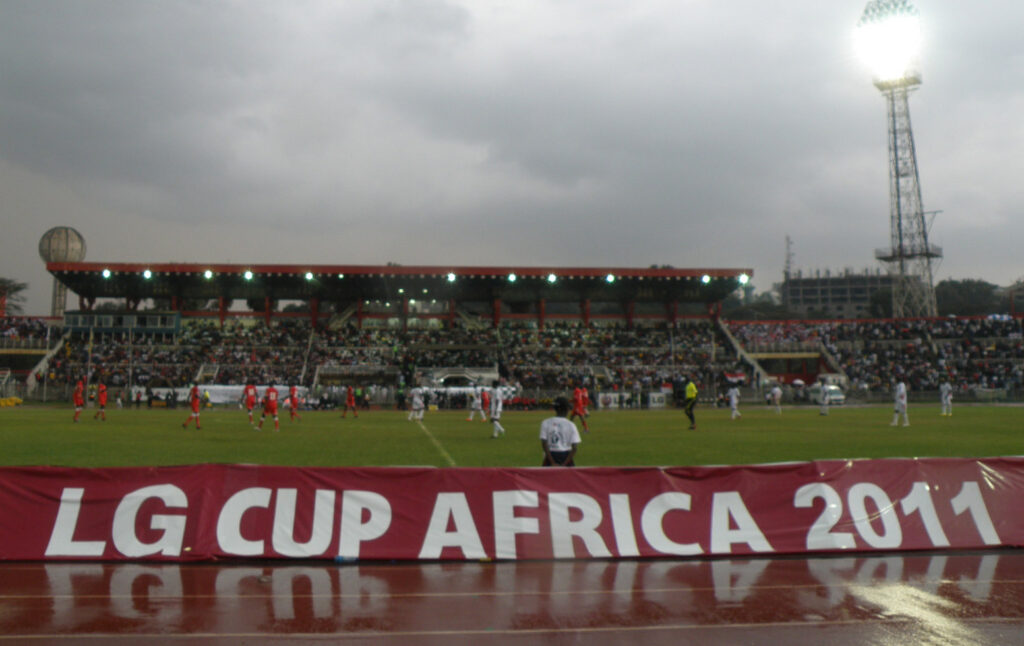
Images: Cover: Football Africa (illustration); Figure 1: LG전자 / Wikimedia Commons (CC BY 2.0)
How this article was made: Football Africa uses AI tools to structure, format and optimise its articles, and occasionally to produce illustrated covers where no free photograph exists. The reporting these articles are based on is human-produced and cited above. Spotted an error? Write to [email protected] and we will correct it. — The editors How we work.