Five wins and 13 goals power Amajita to back‑to‑back COSAFA U20
7 min read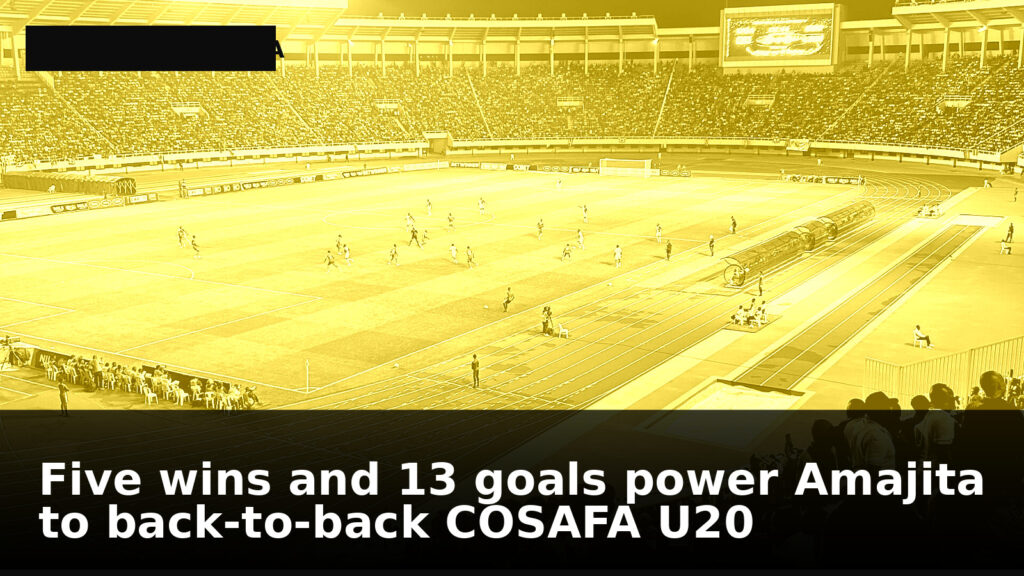
Five wins, 13 goals, one Golden Boot and a ticket to Ghana. Amajita’s 2026 COSAFA U20 campaign in Mozambique put hard numbers behind a simple idea their coach Raymond Mdaka kept repeating: consistency. South Africa’s under‑20s defended the regional title with a 2-1 win over the hosts on Sunday in Matola, then turned the page immediately to Africa — qualification secured for the 2027 U20 AFCON where they will also defend their continental crown.
Mdaka did not bury the lede. “You need consistency of some kind,” he said, crediting preparation, talent and the daily energy of supporters. In a tournament decided by slim margins at the end, Amajita made their advantage over five matches look clear and repeatable. The numbers don’t just decorate the story — they are the story.
What the scoreboard shows: five perfect results, a final edged in Matola
South Africa didn’t just retain their COSAFA U20 title; they did it without dropping a result. Amajita won all five of their matches in Mozambique, culminating in a 2-1 victory over the hosts in the final in Matola. The single-game drama of a final can sometimes disguise the shape of a tournament, but here the throughline is clean: every test passed, every hurdle cleared.
There is also the context that winning begets winning. “Sometimes when you win you need to maintain that consistency of winning, winning and winning,” Mdaka said. The act of defending a trophy amplifies that message, because it shows a programme can sustain a level across cycles — exactly the standard age‑group football often struggles to hit.
By the numbers: Amajita’s COSAFA U20 2026 at a glance
| Metric | Figure |
|---|---|
| Matches played | 5 |
| Wins | 5 |
| Goals scored | 13 |
| Goals conceded | 3 |
| Final result | 2-1 vs hosts in Matola |
| Golden Boot (top scorer) | Steven Mendes — 6 goals |
| Goalkeeper of the Tournament | Takalani Mazhamba |
| AFCON U20 2027 qualification | Qualified — tournament in Ghana |
The table underlines both breadth and edge. Amajita’s tally of 13 goals over five matches shows repeat scoring power across the tournament, while conceding just three on the way to the title underpins why their goalkeeper, Takalani Mazhamba, was recognised as the standout in his position. And when it mattered most, they found the two goals they needed to beat the hosts by a single strike.
What the table cannot show is the emotional and competitive value of that final step. Winning 2-1 away to the hosts carries a specific weight in youth football, where atmospheres and nerves are learning experiences as much as obstacles. It is exactly the kind of situational stress that makes a continental title defence in Ghana feel less like a leap and more like a stride.
Six for Mendes: a Golden Boot that framed the attack
Steven Mendes didn’t just contribute to Amajita’s scoring; he shaped the narrative of the tournament. With six of South Africa’s 13 goals, he took home the Golden Boot and gave the side a reliable end product that opponents had to plan around. In youth tournaments, a dependable finisher can turn promising phases into actual wins — and here the finishing aligned with the team’s perfect record.
The significance of the Golden Boot is not only about the tally. It’s a marker that the broader attacking picture was effective enough to create chances for a leading scorer to repeatedly cash in. The distinction also feeds into Mdaka’s emphasis on building: “It’s a blessing to have this kind of talented players,” he said, signalling both appreciation of the current crop and the intent to keep improving the collective.
Three conceded and a golden glove: the platform at the back
South Africa conceded just three goals in five matches, and that parsimony mattered twice — first on the scoreboard, and then in the honours list. Takalani Mazhamba walked away with Goalkeeper of the Tournament, a recognition the team’s defensive record supports. You don’t take two individual awards out of a compact event like this without controlling both penalty areas.
It is tempting to reduce a goalkeeper’s tournament to a handful of saves, but the broader point here is structural: a team that wins every match while allowing three total suggests an organisation across the backline and in transition that suits the demands of tournament football. When every game carries knockout intensity, a low‑concession profile is the cleanest way to stay in control of your own path.
‘You need consistency’: Mdaka’s blueprint in his own words
Mdaka’s post‑final reflections gave the numbers a philosophy. “You need consistency of some kind,” he said, then tied that back to preparation and the country’s player base: “It says to the country that you have got the talent, when given time and the opportunity to prepare, we can do better.” In other words, results are not accidents; they’re the product of cycles of work that allow talent to settle and express itself repeatedly.
He also framed the repeat as an upgrade path, not a resting place. “Even in the previous edition, honestly, we had very good players and I’m happy we have got an opportunity now to make a better team compared to the one that we came with here.” And then the sentiment that links the dressing room to the stands: “Keeping the trophy, taking it back home where it was for the whole season is something else and I really appreciate and give credit to the boys and every supporter who gave us energy almost every day.”
Ticket to Ghana: what qualification changes now
By reaching the final, Amajita and the hosts — the Mambinhas — secured their places at the 2027 CAF U20 Africa Cup of Nations in Ghana. The practical effect is immediate: planning horizons can lengthen, competition for places can be organised against a fixed target, and friendly windows can be used to shape a squad for a specific tournament rather than auditioning blind. More than anything, the ticket carries a second competitive promise: Amajita go to Ghana not only to participate, but to defend the continental title they already hold.
That status matters in how a cycle is framed internally. It positions the group as custodians of a standard the last cohort set, and it raises the importance of the “consistency” that Mdaka emphasised. The numbers from Mozambique — five wins, 13 scored, three conceded — are a shorthand that can travel with the team into its next camp as both confidence and accountability.
The detail
How the COSAFA pathway delivers AFCON U20 tickets
COSAFA’s under‑20 championship doesn’t just hand out a regional trophy; it allocates places to the CAF U20 Africa Cup of Nations. In 2026, the mechanism was explicit: “By virtue of reaching the final, the South African junior side along with the Mambinhas have also qualified for the 2027 CAF U20 Africa Cup of Nations to be hosted in Ghana,” as reported. That means the COSAFA finalists become Africa’s southern representatives two cycles forward, and it explains why the penultimate game in Mozambique carried qualification stakes equal to the trophy itself. For South Africa, clinching the AFCON spot before the final whistle blew in Matola flipped the pressure profile — the last match decided silverware, not survival. And because Ghana is confirmed as the 2027 host, Amajita’s staff can now align selection and prep windows to a fixed destination, exactly the “time and the opportunity to prepare” their coach described. The pathway’s clarity is also why retaining the COSAFA title reads as process as much as prize: the system rewards programmes that can stand up to elimination football twice in quick succession.
Back‑to‑back in the south: a standard, not a spike
The phrase “defend the title” often flatters to deceive in youth football, where turnover is baked in. Here, it lands with weight. Amajita didn’t just win last year; they kept the trophy, brought it back “where it was for the whole season,” and did it again. That’s a signal about institutional muscle memory — how camps are run, how selection churn is managed, how the identity of the team is communicated to new players.
And there is no bravado in the way the win was framed. Mdaka located the achievement squarely in the group — “I really appreciate and give credit to the boys” — and in the stands: “every supporter who gave us energy almost every day.” It reads like a reminder that a repeat isn’t a flourish. It’s a baseline to build from, and a public standard everyone around the team can hold onto.
From Matola to Ghana: what comes next for Amajita
With qualification already locked, the next job is internal. Mdaka’s comment about the “opportunity now to make a better team compared to the one that we came with here” points to selection pressure and refinement rather than wholesale rebuilds. The COSAFA numbers give that process a compass: reliable scoring through a Golden Boot winner, a defensive record that underwrote a perfect run, and the proof of problem‑solving under a final’s pressure.
The calendar now tilts toward 2027, with Ghana named host and Amajita travelling there as continental champions who must “maintain that consistency of winning, winning and winning.” The work is specific: preserve the habits that scale from region to continent, and keep the message simple enough that a new cohort can inherit it. Five wins and 13 goals aren’t just a souvenir of Mozambique. They are the outline of what South Africa expects to take to Africa again.
Sources: Mdaka Reveals Secret To Amajita’s Historic COSAFA Triumph (idiskitimes.co.za)
Images: Cover: Football Africa (illustration)
How this article was made: Football Africa uses AI tools to structure, format and optimise its articles, and occasionally to produce illustrated covers where no free photograph exists. The reporting these articles are based on is human-produced and cited above. Spotted an error? Write to [email protected] and we will correct it. — The editors How we work.