Numbers on the board: Mofokeng’s 15, 5 and 4 answer the doubts
8 min read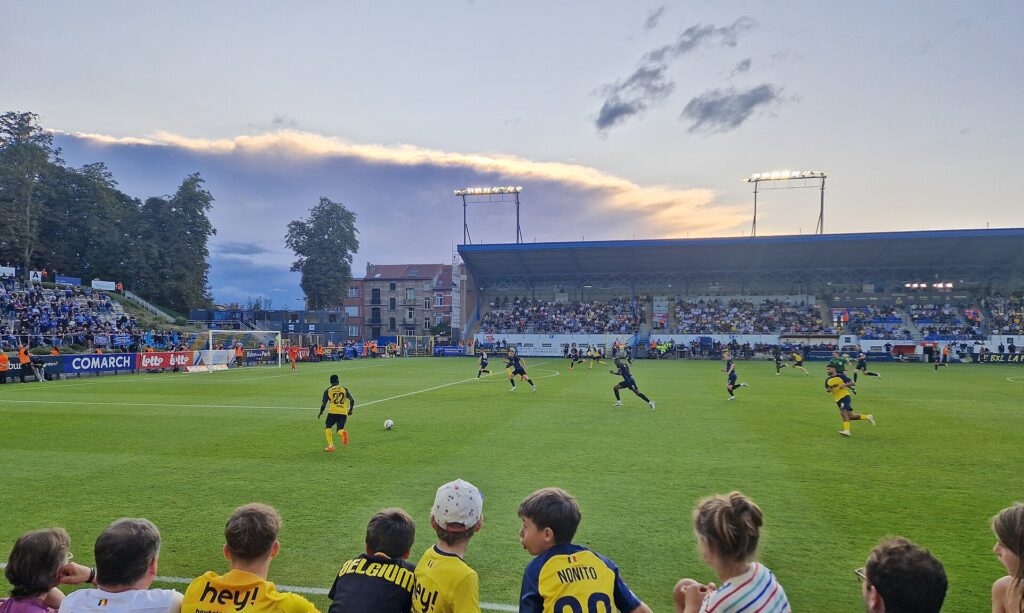
Fifteen games, five goals, four assists. At 22, Relebohile Mofokeng has put up the kind of early output at Royale Union Saint‑Gilloise that turns noise into applause. The South African winger’s first months in Belgium, as reported by iDiski Times, are exactly the kind of return that answers the biggest pre‑season question around him: could he carry his Orlando Pirates form into Europe?
Benni McCarthy, now head coach of Kenya’s Harambee Stars and a Champions League winner in his playing days, thinks that question is already being settled. “I think the biggest compliment I can give the boy is that he proved Hugo Broos wrong,” McCarthy said on SportyTV, referencing the former Bafana Bafana coach’s skepticism about Mofokeng’s ability to adapt in Europe because of his physique. The numbers to date back McCarthy’s point.
A start built on end‑product, not promise
iDiski Times reports Mofokeng has five goals and four assists in 15 Union SG appearances so far. That is not projection or potential; it is tangible contribution at a club playing European football. McCarthy underlined the same theme, noting “he’s scored four goals and a couple assists already so early in the season” — the kind of tally that makes stylistic debates about size feel beside the point once the ball rolls.
Crucially, the Belgium move did not come off a hot fortnight; it followed a full, decorated campaign. Mofokeng arrived in Brussels “following an impressive season with Orlando Pirates,” where he helped land a treble that included the Betway Premiership title — the club’s first league crown in 14 years — and was voted the PSL Player of the Season, as iDiski Times details. He also entered this European step “newly‑crowned SAFJA Men’s Footballer of the Year,” so the baseline expectation was high. Meeting it this quickly is what turns a step up into a stride.
McCarthy’s verdict, in his own words
McCarthy’s appraisal cuts to the heart of the pre‑move debate. “Hugo Broos was highly critical about him, thinking that he was too small, he was too skinny, he was too petite, and he wasn’t up to European standards that he would not fit in,” he said. “But he’s gone there, and he’s proven him wrong.” That last clause is the bit that matters most: not a theoretical rebuttal, but production. McCarthy added, “He’s proven his biggest critic wrong and that’s what I’m the most proud of the boy. And that shows that he’s South African blood he’s a survivor. He can survive anywhere.”
The coach’s message to Mofokeng is to stay on the same wavelength. “Now he just has to continue, keep believing in himself… And his football will flourish and hopefully he can establish himself well because it’s a great stepping stone,” McCarthy said. He pointed out the platform: “he’s playing for a team that’s in European football. Unfortunately, they didn’t make it to the Champions League, but they are in the Europa League… they are always in the title hunt for the season in the Belgium Pro League.” The frame is clear: maintain this level in a side with continental and domestic stakes.
From Pirates’ treble to Brussels: the arc that matters
The data points on Mofokeng’s CV are unusually compressed for a 22‑year‑old. Last season’s treble with Orlando Pirates — including the Betway Premiership title, a first in 14 years — put him at the heart of a winning machine, and individual recognition followed with the PSL Player of the Season award. That is not a small leap to replicate abroad; the Premier Soccer League’s top individual honour carries weight, and the South African Football Journalists Association naming him Men’s Footballer of the Year added a second, independent stamp.
Those markers explain why his Belgian output is being watched closely back home. It is not just that he left; it is that he left as the league’s standout and a fresh media pick. The five goals and four assists are therefore more than nice‑to‑have figures — they are the first checkpoint in testing whether a domestic apex can translate in a club that, as McCarthy notes, plays in the UEFA Europa League and routinely contests the Belgian title race. Early as it still is, the checkpoint has been passed.
By the numbers: the spine of Mofokeng’s fast start
| Metric | Figure |
|---|---|
| Age | 22 |
| Appearances for Union SG | 15 |
| Goals for Union SG | 5 |
| Assists for Union SG | 4 |
| Last season award | PSL Player of the Season |
| Media accolade | SAFJA Men’s Footballer of the Year |
| Current UEFA competition | Europa League |
These are the right figures to centre because they isolate what is actually being measured: impact. Age gives the development context; appearances, goals and assists establish presence and end‑product; the awards explain why expectations were high; and “Europa League” identifies the competitive level of the stage. They do not settle questions about sustainability or ceiling — they are not meant to — but they describe a start robust enough to withstand skepticism rooted in physique rather than football.
Why the size talk fades when the scoreboard moves
Broos’s critique, as relayed by McCarthy — “too small, too skinny, too petite” — belongs to a long lineage of doubts that trail creative attackers. The counter‑argument in 2026 is not an abstract appeal to technique; it is that in Belgium, for Union SG, Mofokeng is already producing. When players stick or slip in Europe, it is usually the outputs that move the needle first. The winger’s five and four speak fluently in dressing rooms and boardrooms alike.
McCarthy framed it in psychological rather than physical terms: survival in uncomfortable situations. “You put him in an uncomfortable situation, and he comes up top,” he said, urging Mofokeng to “continue” and “keep believing.” That is also the practical demand of Union SG’s calendar: with European football on top of a domestic title chase, there are frequent uncomfortable situations. Putting up numbers inside that churn is not only an answer to a coach’s doubt; it is the argument for keeping you on the team sheet.
The detail
The Broos benchmark and the national‑team bar
Because the criticism came from a former Bafana Bafana coach, it inevitably reads as a selection benchmark as much as a scouting opinion. Broos, McCarthy recalls, questioned whether Mofokeng would be “up to European standards,” essentially making adaptation abroad a proxy test for international‑level robustness. Inside that frame, the 15‑game sample and the five goals plus four assists that iDiski Times reports carry an extra charge: they are not just club numbers; they are a reply that travels back into the South African conversation about who is ready for the heaviest games.
McCarthy’s reading is that the reply is already clear. He chose the word “survivor,” a trait national coaches prize in tournament and qualifier windows as much as club managers do in three‑game weeks. That he contextualised Union SG as a Europa League side that “are always in the title hunt” matters too: he is effectively arguing that the crucible is adequate — European football plus a domestic race — for judging readiness. None of this decides caps or pecking orders on its own, but it reframes the ‘too small’ verdict through present‑tense production on a platform McCarthy explicitly rates.
The Union SG platform: European lights, domestic heat
McCarthy sketched the context succinctly: Union SG “didn’t make it to the Champions League, but they are in the Europa League,” and “they are always in the title hunt for the season in the Belgium Pro League.” That pairing matters. European nights diversify the types of problems a winger faces; domestic pressure demands week‑to‑week reliability. It is within that schedule that 15 appearances, with five goals and four assists attached, register so strongly.
It also explains the tone of McCarthy’s counsel. “He’s just got to make this year a special year,” he said, adding that a campaign like this can be “a great stepping stone” that “might open doors to bigger leagues.” There is no gilding there — simply the logic of proof: turn early output into season‑long consistency in a competitive side and you reset your market and your national‑team case at the same time.

Awards as a baseline, not a peak
The hardware Mofokeng carried out of South Africa — PSL Player of the Season and the SAFJA Men’s Footballer of the Year — set a baseline that turns any quiet start into a headline. That is why the five goals and four assists within 15 games land with extra weight: they silence the one complaint that would have stuck, that he needed a long runway. Instead, the runway was short and the take‑off clean.
None of this guarantees the curve keeps climbing. It does, however, put Mofokeng exactly where McCarthy wants him: in a place to “establish himself well,” to let “his football flourish,” and to make a “special” first European year the foundation rather than the summit. The table of cold figures — age, appearances, goals, assists, awards, Europa League — is doing the loudest talking so far.
What comes next: keep stacking the same numbers
McCarthy’s roadmap is simple: “continue, keep believing in himself,” because confidence is “the biggest part of it all.” The setting is right — a Europa League campaign and a Belgian title push, by his account — and the sample of 15 games with direct output suggests the staff at Union SG trusts what they are seeing. The next checkpoint is not a mystery; it is whether those same metrics are still on the rise when spring arrives.
For the doubters, the conversation has already shifted. It is no longer whether a 22‑year‑old who looked too slight for some can adapt; it is whether a young South African already producing in Europe can turn a fast start into a first complete European season. On the evidence iDiski Times has put on record — and on McCarthy’s testimony — Mofokeng is giving himself every chance.
Sources: Benni Makes Strong Mofokeng-Broos Claim (idiskitimes.co.za)
Images: Cover: Sidney.Cortez / Wikimedia Commons (CC BY-SA 4.0); Figure 1: Carlo Bruil Fotografie / Wikimedia Commons (CC BY 2.0); Figure 2: Carlo Bruil Fotografie / Wikimedia Commons (CC BY 2.0)
How this article was made: Football Africa uses AI tools to structure, format and optimise its articles, and occasionally to produce illustrated covers where no free photograph exists. The reporting these articles are based on is human-produced and cited above. Spotted an error? Write to [email protected] and we will correct it. — The editors How we work.