CAF’s Tanzania tour shows the AFCON inspection playbook
9 min read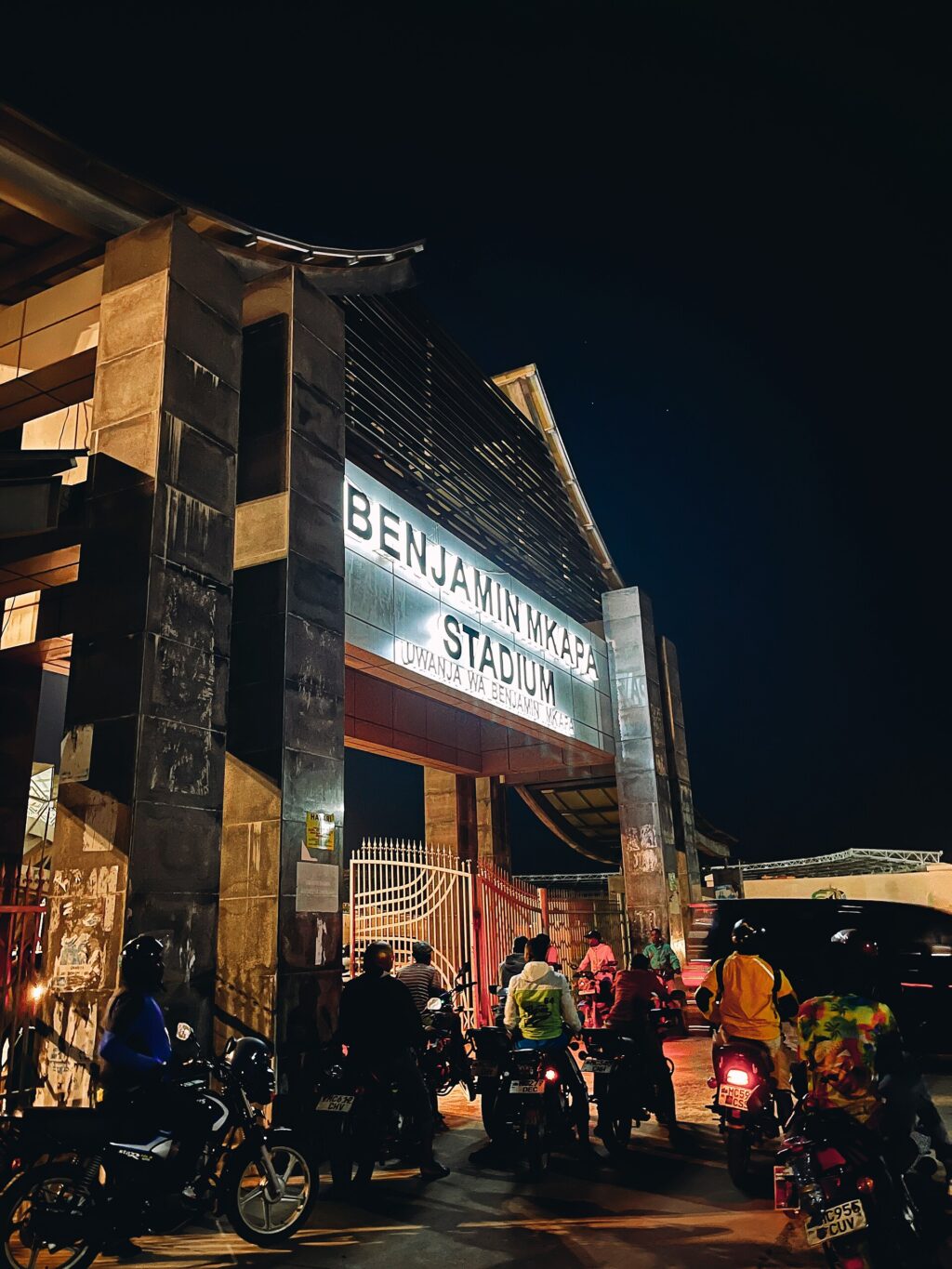
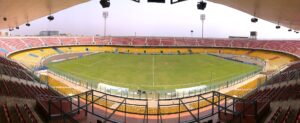
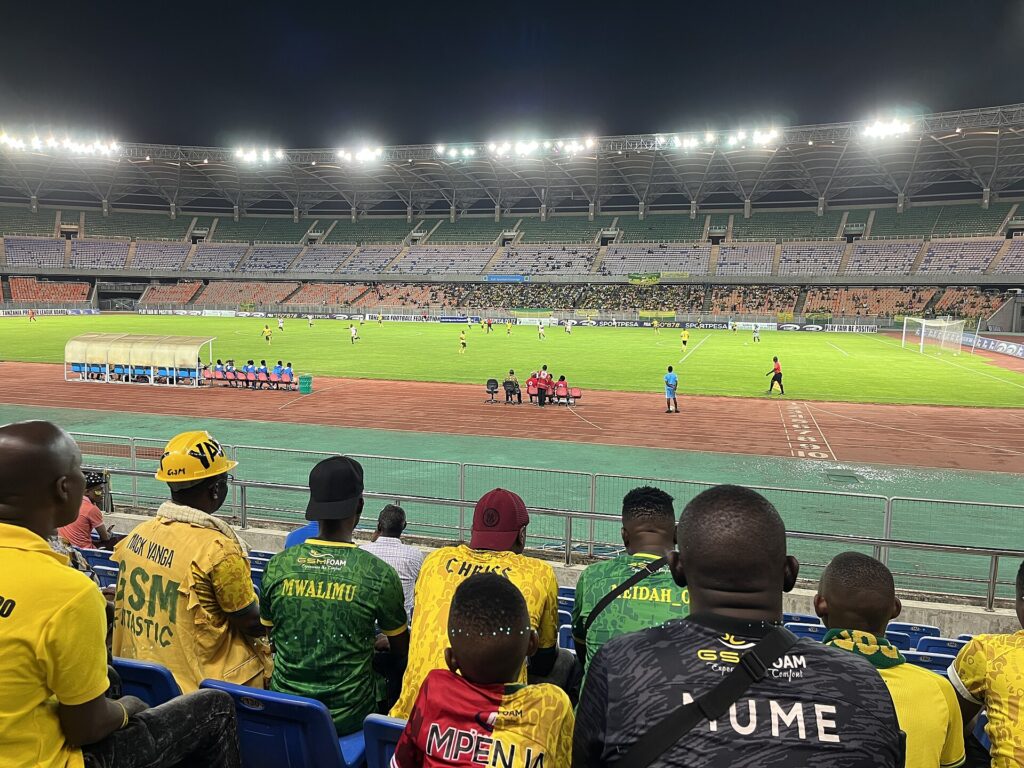
The tell is in the itinerary. CAF’s inspection team is in Tanzania this week, moving from city to city and walking through stadium tunnels, training grounds, hotels and airports. Their stop at the National Stadium in Dar es Salaam — the centrepiece of Tanzania’s AFCON 2027 preparations — has focused on the practical details that make a tournament work: media tribunes, dressing rooms, floodlights and the pitch.
This visit is framed as partnership, not policing. CAF is on site “to see what we already have and to guide us on what we can make better before 2027,” with a final report to follow that will give a clear roadmap. With “almost a year” still on the clock, Tanzania’s Ministry of Sports, the Tanzania Football Federation (TFF) and other partners are positioned to act on those recommendations at pace ahead of a first-ever AFCON as co-hosts with Kenya and Uganda.
The news peg: a live inspection across cities and sites
CAF’s team is on the ground now in Tanzania, a country preparing to co-host the 2027 Africa Cup of Nations with Kenya and Uganda. The inspectors are touring the full ecosystem: stadiums, training sites, hotels and airports. In Dar es Salaam, where the National Stadium anchors the plan, they are paying particular attention to media tribunes, dressing rooms, floodlights and the pitch — the operational backbone of matchday.
The message around the visit is deliberately constructive. The inspection “is not about finding faults. It is about partnership,” with the emphasis on seeing what is in place and identifying what can be improved. The formal output — a final report — is still to come, and is expected to set out the work plan for the year ahead. Until then, the week’s city-to-city walk-throughs are setting baselines and timelines.
What CAF checks, in sequence
This week’s route map through Tanzania illustrates the four pillars CAF evaluates on site: stadium infrastructure, training facilities, hotels and airports. At the National Stadium, the tour has zeroed in on the parts that directly affect match operations — the media tribune, the dressing rooms, the floodlighting and the playing surface. Those are the immediate determinants of whether a venue can “host big crowds and big matches,” as described on the ground.
Beyond Dar es Salaam, the team is visiting training facilities — the day-to-day base for teams when they are not playing — and taking in accommodation and transport nodes. The hotels and the wider hospitality industry are in focus because national teams need to stay for weeks, not days; airports matter as gateways and connectors between co-hosts. The source material does not set out further technical specifications or numerical thresholds for any of these checks, but it makes clear they are the domains under inspection.
Who acts on findings and how recommendations are used
The actors are clear even if job titles are not enumerated. CAF runs the inspection, compiles the final report and provides recommendations; at national level, the Ministry of Sports, TFF and “all partners” are expected to work from that roadmap to deliver upgrades that meet CAF standards. The framing is collaborative: “CAF is here to walk with us,” a line that underlines that this is a guided process rather than a one-off pass/fail audit.
Once the report lands, the expectation is execution on a deadline: “We still have almost a year,” and “act on it with speed.” The source does not specify the cadence of follow-up visits, sign-off milestones or sanctions, but it does stress that the recommendations coming now are a “gift” — feedback early enough to be implemented before 2027. In practice, that means local authorities and football administrators carry the delivery risk from here.
The timeline to 2027: inspection now, a year to deliver
The timing of this visit matters. With AFCON 2027 a year away, the inspection is positioned as the moment to lock down scope and sequence for works: what to fix at stadium level, what to finish at training bases, how to scale accommodation and what to streamline at airports. The final report is the hinge between assessment and execution, giving Tanzania a documented “clear roadmap.”
Because Tanzania qualifies automatically as a co-host, the national team — the Taifa Stars — has a unique sporting runway that mirrors the infrastructure calendar: more time for friendlies, exposure for young players and a stronger domestic league while building to a home tournament. The source does not give specific fixture dates or friendly opponents, but it aligns the team’s preparation window with the country’s venue-readiness window.
Inside the stadium check: tribunes, rooms, floodlights, pitch
When CAF’s group walks the National Stadium in Dar es Salaam, they are not just admiring the bowl. They are interrogating the matchday core: whether the media tribune can serve big games, whether the dressing rooms are up to standard for elite national teams, whether the floodlights meet the level for evening play and whether the pitch is fit. The venue already “can host big crowds and big matches,” but the visit is designed to capture the gap between current state and AFCON-readiness.
The source does not disclose measurements, broadcast seat counts or luminance levels, nor does it spell out turf specifications. It does, however, put these four elements on the checklist explicitly. That places the stadium upgrades in a very practical frame: clear, visible components that can be planned and delivered in months, not years, if resourced and sequenced correctly by the Ministry, TFF and project partners.
Training bases, hotels and airports: the tournament’s daily spine
CAF’s itinerary also runs through training facilities outside Dar es Salaam. This is where Tanzania sees a “unique advantage”: stable weather, welcoming people and a hospitality industry “ready to host teams for weeks at a time.” The source even invites readers to imagine “24 national teams choosing Tanzania as their base camp,” a nod to the competition’s 24-team scale.
Airports are on the tour because they stitch a co-hosted tournament together — from international arrivals to regional connections across Kenya and Uganda. Hotels matter at scale, from team stays to media and supporters, and they are central to the jobs and tourism upside cited: busy transport, full hotels, lively markets and work for young people in events, security, media and sports management. The source does not provide room counts, training-ground numbers or airport slot data; it simply confirms these categories are being checked now.
The detail
Why these four checks matter on matchday
The stadium checklist highlighted in Dar es Salaam goes straight to match control. A serviceable media tribune is not just seating; it is the locus for accredited coverage and live operations, and when inspectors “look closely” at it, they are testing whether big matches can be handled at tempo. Dressing rooms speak to player flow — space, access and functionality — and directly feed into how teams warm up, emerge and reset at half-time. Floodlights determine scheduling flexibility, especially when evening kick-offs are in play, and the pitch is the base condition for everything from ball speed to player safety. The source does not enumerate thresholds, but placing these four items on the agenda narrows the to-do list to the controllables. Outside the bowl, training sites, hotels and airports are the daily spine of a month-long tournament: they shape how teams recover, how delegations live and move, and how the three co-hosts keep the event knitted together. CAF’s on-site look at all four pillars now, with a year to go, is designed to turn those interlocking pieces into a workable calendar and construction plan.
If something falls short: from gaps to a roadmap
The working assumption in Tanzania is improvement, not punishment. “Any recommendations they give now are a gift,” the source says, because the country “still [has] almost a year” to act. The final report will “give us a clear roadmap,” which implies shortcomings are converted into itemised work rather than immediate disqualification of venues.
The article does not set out compliance thresholds, hard deadlines for each site, or what happens if a venue misses a milestone. It also does not list sanctions or alternative-venue plans. What it does describe is the governance chain — CAF inspects and recommends; the Ministry of Sports, TFF and partners deliver — and the tone: partnership to reach “CAF standards” by 2027. The atmosphere, it adds, is a national responsibility beyond infrastructure: “CAF can inspect infrastructure, but only we can create the atmosphere.”
| Area inspected | Specific items mentioned | Status per source |
|---|---|---|
| Stadiums | Media tribunes; dressing rooms; floodlights; pitch | Being toured this week, including the National Stadium in Dar es Salaam |
| Training facilities | — | Being toured outside Dar es Salaam |
| Hotels | — | Being toured |
| Airports | — | Being toured |
Co-hosting with Kenya and Uganda: what it changes (and what it doesn’t)
Tanzania will co-host AFCON 2027 “alongside Kenya and Uganda,” and that is framed as a strength: East African unity and shared capacity. For Tanzania, it is also a debut as an AFCON host nation — and the stated aim is to make it “memorable.” Co-hosting does not dilute the need for full readiness in each country’s assigned venues and cities; it multiplies the moving parts that inspections must account for across borders.
The source stops short of detailing match allocations, base-camp distributions or inter-country travel plans. It does, however, underline why this moment is significant: the cameras of the world will be on Tanzania for a month, showing “our beauty, our culture and our capacity.” Inspections of airports and hotels therefore carry weight beyond logistics — they are part of the country’s presentation to the continent and the world.
The stakes: jobs, tourism and a once-in-a-generation sporting window
The benefits are spelled out in everyday terms: full hotels, busy transport, lively markets, and jobs “in events, security, media and sports management.” That is the broader payoff of getting the inspection-to-delivery sequence right — not just a football tournament staged to standard, but an economy activated around it.
For the Taifa Stars, the sporting upside is just as clear. “As hosts we qualify automatically,” the source notes, buying time for more international friendlies, exposure for young players and a stronger domestic league, all geared toward competing rather than merely participating in 2027. The inspection tour is thus part of a larger preparation arc that includes the team’s calendar and the country’s readiness.
What comes next in Tanzania’s AFCON readiness
First comes the paper: the final inspection report that “will give us a clear roadmap.” Then comes the work: the Ministry of Sports, TFF and partners acting “with speed” on media tribunes, dressing rooms, floodlights and the pitch where needed, and aligning training facilities, hotels and airports with the plan. The tone from the ground is confident — “Tanzania is serious and Tanzania is ready to rise to the occasion” — but the delivery will be in the build and the fixes that follow this week’s walk-throughs.
The source material is explicit about what is being checked and why, and candid about what it does not yet set out: technical standards, sanction paths, or hard dates for sign-off. Those will be implied by the year-ahead runway and the rhythm of co-hosting with Kenya and Uganda. The through-line is simple: CAF is in-country now, the report is the hinge, and 2027 is the deadline.
Sources: Africa: Tanzania Ready to Welcome Africa (allafrica.com)
Images: Cover: Mangapwani / Wikimedia Commons (CC BY-SA 4.0); Figure 1: Mangapwani / Wikimedia Commons (CC BY-SA 4.0)
How this article was made: Football Africa uses AI tools to structure, format and optimise its articles, and occasionally to produce illustrated covers where no free photograph exists. The reporting these articles are based on is human-produced and cited above. Spotted an error? Write to [email protected] and we will correct it. — The editors How we work.