Two scorelines, three rulings, one ticket: the WAFU‑B final decided by numbers
7 min read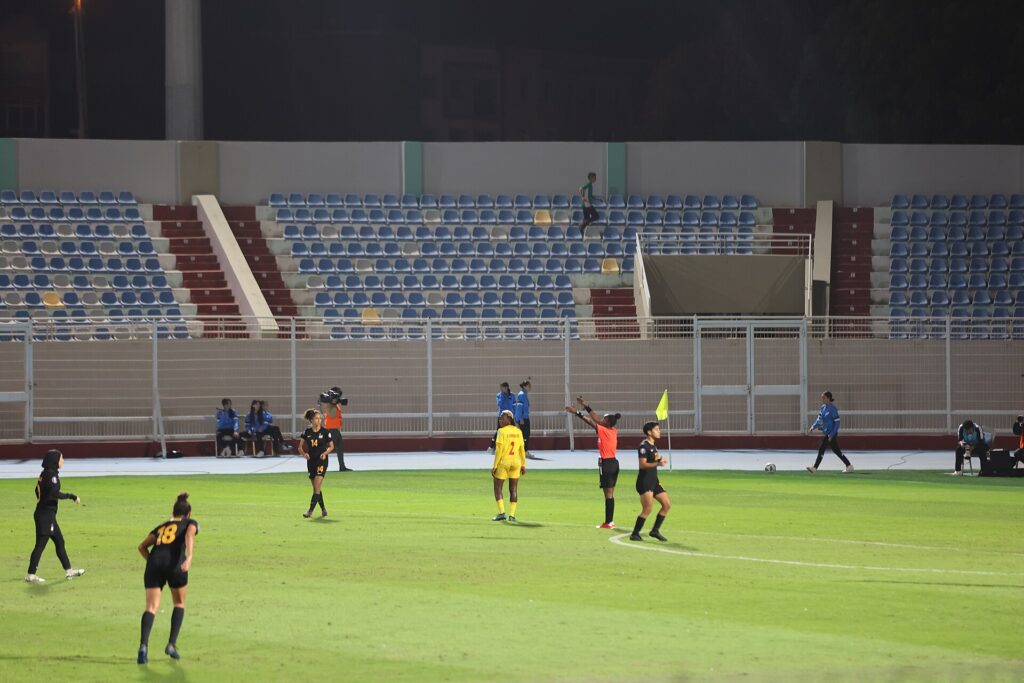
Two numbers frame a story that now stretches from Ouagadougou to Cairo: 2-2 and 3-2. On 5 September in Burkina Faso’s capital, Edo Queens and Ampem Darkoa Ladies fought to a 2-2 draw after 90 minutes, with the Nigerians winning the shoot-out 4-1. On 29 October in Egypt’s capital, two minutes into extra time, Ampem Darkoa found the decisive goal and walked away 3-2 winners — and WAFU‑B champions.
What happened in between were committee rulings, appeal dates and a venue switch that Edo Queens are now formally contesting. According to Premium Times Nigeria, CAF’s Organising Committee ruled on 26 September that the Ouagadougou shoot-out had “no sporting effect,” a position upheld by the CAF Appeal Board on 16 October, ordering the final to resume from the start of extra time at 2-2. Ampem Darkoa’s extra-time winner in Cairo secured the zone’s ticket to the 2026 CAF Women’s Champions League — and triggered a petition in which Edo Queens ask CAF to nullify the continuation, suspend confirmation of the slot, or even declare them champions if no replay can be staged before the continental kick-off on 1 November.
From Ouagadougou to Cairo: the committee trail that reset a final
The Ouagadougou leg produced a conventional narrative: 2-2 after regulation, and Edo Queens prevailing 4-1 on penalties, seemingly banked as regional champions and CAF Women’s Champions League qualifiers. Ampem Darkoa contested that outcome, taking the matter to CAF’s Organising Committee, which on 26 September declared the penalties void of “sporting effect.” The remedy was stark: restart the game from the beginning of extra time with the score restored to 2-2.
Edo Queens’ advantage — a psychological edge and a ticket to Egypt, they believed — was thus frozen pending appeal. On 16 October, the CAF Appeal Board upheld the Organising Committee’s decision. What followed was a relocation: the continuation was staged in Cairo on 29 October. Within two minutes of extra time, Ampem Darkoa struck, flipping the storyline and sealing a 3-2 victory after extra time to take the WAFU‑B title and the zone’s continental berth.
By the numbers: dates, minutes, rulings and venues
| Event / Item | Number / Detail |
|---|---|
| Original final (Ouagadougou) | 5 September 2026 |
| Score after 90 minutes | 2-2 |
| Penalty shoot-out | Edo Queens won 4-1 |
| CAF Organising Committee ruling | 26 September 2026 — penalty shoot-out had no sporting effect; resume from extra time at 2-2 |
| CAF Appeal Board decision | 16 October 2026 — ruling upheld |
| Rescheduled venue | Cairo, Egypt |
| Resumed match date | 29 October 2026 |
| Decisive moment | Ampem Darkoa scored two minutes into extra time |
| Final result | Ampem Darkoa won 3-2 after extra time |
| CAF Women’s Champions League | 1–15 November 2026 |
Those entries do more than record time and place. They explain how a tournament decided in a shoot-out was rewound to the old 120‑minute script — then decided, swiftly, inside the very extra time that had not been played in Ouagadougou. They also underline the compressed calendar: a 29 October finish feeding straight into a 1–15 November continental event in the same host country, Egypt.
What Edo Queens are contesting — and what is not established
Edo Queens have filed a petition to CAF “seeking to overturn” the 3-2 extra-time loss and to have the Cairo continuation deemed “null and void.” Premium Times Nigeria reports three principal grounds. First, they challenge the relocation from Ouagadougou to Cairo, alleging the move occurred without the required WAFU‑B confirmation stipulated in CAF’s decision.
Second, they argue the “sporting conditions” were not properly restored. The club claims it was prevented from fielding eligible players who took part in the original game, and complains about accommodation, alleging members of its delegation were housed at a military base and not a conventional hotel. Third, Edo Queens say official communication about the venue, kick-off and arrangements was inadequate in ways that could have affected their preparations. These allegations are contained in the club’s petition and have not been independently established.
The remedy they want, on a clock that is already ticking
Edo Queens have asked CAF to suspend confirmation of the WAFU‑B slot pending the determination of their complaint. They also want WAFU‑B compelled to produce documents tied to the disputed fixture: the venue confirmation, match sheets, substitution records, player eligibility lists and disciplinary records. Their preferred remedy is a full 90‑minute replay “under properly regulated conditions,” featuring eligible players and staged at the original venue.
Alternatively, the Nigerians propose a more drastic outcome: if a replay cannot be completed before the continental competition begins on 1 November, CAF should declare Edo Queens the WAFU‑B champions. As of the information reported, no decision on this fresh petition had been communicated. Against that uncertainty, Ampem Darkoa are proceeding with preparations for Egypt.
Group B in Egypt: Ampem Darkoa’s road back to the continent
Ampem Darkoa’s 3-2 triumph confirmed their return to the CAF Women’s Champions League for the second time, having previously featured in 2023 in Côte d’Ivoire. They have been drawn in Group B alongside Morocco’s AS FAR, Uganda’s Kawempe Muslim Ladies and Mali’s USFAS Bamako. The tournament runs from 1 to 15 November in Egypt, a schedule that leaves a narrow window for any intervention that might alter WAFU‑B’s qualifier.
The Ghanaian champions thus move from the administrative turbulence of September and October into a defined competitive lane in November. Group B is set; fixtures await; and any ruling on Edo Queens’ new petition would have to interact with a competition timetable that is already locked in for the host country.
The detail
Calendars, committees and the replay request
The hinge of Edo Queens’ petition is temporal as much as procedural. The continuation was played on 29 October in Cairo; the CAF Women’s Champions League is scheduled for 1–15 November in Egypt. Within that frame, Edo ask for two distinct remedies: ideally, a full 90‑minute replay at the original venue under “properly regulated conditions” and with eligible players; alternatively, if such a replay cannot be staged before 1 November, a declaration that Edo are WAFU‑B champions. They also seek to suspend confirmation of the zone’s slot while CAF determines the complaint. The committees’ prior steps are clear on their dates and effects: on 26 September, the Organising Committee voided the Ouagadougou shoot‑out and ordered extra time to be played from 2‑2; on 16 October, the Appeal Board upheld that directive. Any further remedy would have to reckon with those established rulings and the immediate competition window now upon Egypt.
Why ‘restoring conditions’ is the fault line
The Organising Committee’s instruction was explicit: resume from the “beginning of extra time” with the score 2-2. Edo Queens’ petition argues that the broader sporting conditions around that moment were not restored. They claim they were prevented from fielding eligible players who had participated in the original encounter and object to the Cairo accommodation arrangement, alleging their delegation was placed at a military base instead of a hotel.
Those claims, which Premium Times Nigeria states have not been independently established, go to the heart of what a continuation is supposed to protect: the competitive equilibrium of a suspended contest. Edo also cite inadequate official communication about the venue and kick-off time. CAF’s side of the process is represented in the documented dates of decisions and their outcomes; the Nigerian club’s petition asks for the paperwork — venue confirmations, match sheets and eligibility lists — that could underpin whatever ruling comes next.
What the numbers settle — and what they don’t
The figures settle the outcome on the field: 3-2 after extra time to Ampem Darkoa on 29 October in Cairo, preceded by committee decisions on 26 September and 16 October that erased the Ouagadougou shoot-out and ordered a restart from 2-2. They also fix the context: a continental tournament running 1–15 November in the same country where the continuation was staged. The Ghanaian champions take the WAFU‑B title and the zone’s qualification place.
They do not settle the fairness questions Edo Queens raise: whether the venue shift was properly confirmed by WAFU‑B, whether communication and logistics hit the mark, or whether the “eligible players” who featured in Ouagadougou were available under comparable conditions in Cairo. Those are the matters the petition places before CAF, backed by requests for documents and — if the clock allows — a 90‑minute replay at the original venue.
Next: preparation in Egypt, petition in motion
As things stand per Premium Times Nigeria’s reporting, Ampem Darkoa prepare to face AS FAR, Kawempe Muslim Ladies and USFAS Bamako in Group B of the CAF Women’s Champions League in Egypt from 1 to 15 November. Their 3-2 extra‑time win is the operative result, and it has delivered their second appearance on the continental stage after 2023 in Côte d’Ivoire.
Edo Queens, for their part, have put their case in writing: suspend confirmation of the slot, produce the match documentation, and, if need be, replay the final at the original venue — or declare them champions if a replay cannot be completed before kick‑off. No decision on the fresh petition accompanies the published information. Between a 2-2 in Ouagadougou and a 3-2 in Cairo, the numbers have done their work; whether the paperwork now revises that ledger is a question only CAF can answer, and the calendar is already counting down.
Sources: WAFU-B: Edo Queens petition CAF after losing disputed final to Ampem Darkoa (www.premiumtimesng.com)
Images: Cover: Reda benkhadra / Wikimedia Commons (CC BY-SA 4.0); Figure 1: Reda benkhadra / Wikimedia Commons (CC BY-SA 4.0)
How this article was made: Football Africa uses AI tools to structure, format and optimise its articles, and occasionally to produce illustrated covers where no free photograph exists. The reporting these articles are based on is human-produced and cited above. Spotted an error? Write to [email protected] and we will correct it. — The editors How we work.