Six times more, three times bigger: how CAF’s money actually moves in 2026
6 min read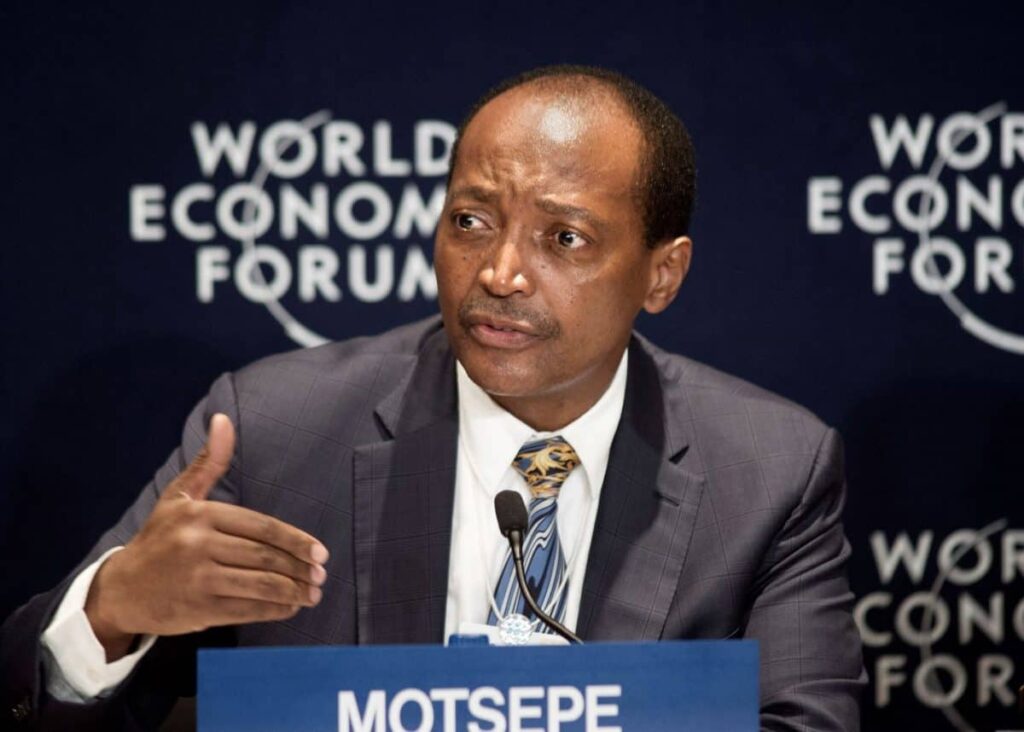
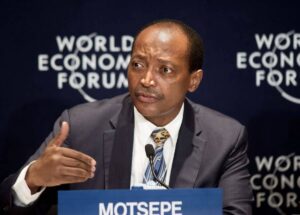
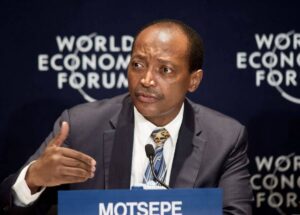
Sixfold to the federations, triple to the clubs, USD 100,000 just for making the preliminary round: the headline numbers Patrice Motsepe laid out at CAF’s Strategy Conference are meant to change how money flows through African football — and how results are judged.
Motsepe said the annual grant to each of CAF’s 54 Member Associations has risen from R2 million to R12 million in four years. He added that CAF now sets aside R900 million a year for club football, up from R300 million, and that from the 2025-26 season every club that reaches the preliminary rounds of CAF’s club competitions will receive USD 100,000.
The three cheques reshaping 2026
Start with the federations. Each of the 54 Member Associations now receives R12 million annually — up from R2 million within four years. Motsepe framed that increase as room for associations to invest in infrastructure, coaching, competitions and administration, and as a basis for greater stability and independence.
Then the clubs. CAF has tripled the annual allocation for club football to R900 million from R300 million. On top of that, from 2025-26, every club that qualifies for the preliminary rounds of the interclub competitions gets USD 100,000 — a direct payment intended to support participation and, as Motsepe argued, to help professionalise and raise standards across leagues and the continental game.
Member Associations: what the R12 million is meant to deliver
The purpose of the larger grants is explicit: more and better pitches and facilities, better-qualified coaches, stronger domestic competitions and more capable football administrations. Motsepe’s message was that African football will be judged on outcomes, not intentions, and that he wants the quality of football raised across every association, not just a few leading nations.
For associations, the effect is twofold. First, predictable annual funds at a higher level offer stability for planning and staffing. Second, the scale of the increase creates headroom for projects that were out of reach at R2 million a year. The expectation, set from the top, is that this money translates into visible progress.
Clubs: the R900m pot and the USD 100,000 prelim guarantee
CAF’s club allocation has been pushed to R900 million per year, which Motsepe positioned as building on recent support to clubs. The clearest new instrument is the USD 100,000 payment to each club that reaches the preliminary rounds of CAF’s club competitions from the 2025-26 season.
The logic is straightforward. If more clubs can afford to prepare, travel and compete, domestic leagues gain stronger participants, players develop in better environments, and the overall standard of the continental competitions improves. Motsepe linked stronger clubs to stronger leagues and more developed players, describing a pyramid in which investment at club level lifts the sport as a whole.
| Item | Before | Now / From |
|---|---|---|
| Member Association annual grant | R2 million | R12 million |
| Annual allocation for club football | R300 million | R900 million |
| Preliminary-round club payment | — | USD 100,000 per club (from 2025-26) |
| CAF reported revenues | — | USD 166.42 million; return to profitability |
| CAF financial position when Motsepe arrived | Negative $45 million | — |
Where CAF says the money comes from
Motsepe tied the bigger distributions to a healthier balance sheet. CAF has reported revenues of USD 166.42 million and a return to profitability. That stands in contrast to the confederation’s position when Motsepe took office, which he described as a negative balance of $45 million.
Higher revenues, he argued, make the higher distributions possible. The numbers are also presented as part of a broader turnaround story: from red ink to restored financial capacity, and from constrained support to scaled-up investment right across the system — federations, clubs and the competitions they run.
Who sets the allocations, and how priorities are communicated
The Strategy Conference was the platform for Motsepe to state what CAF is “now” doing: setting aside R900 million annually for club football, increasing Member Association grants to R12 million, and introducing the USD 100,000 preliminary-round club payments from 2025-26. In other words, the decisions and the purse strings sit at the confederation level, and the signals about how to use the money are being sent from there too.
Motsepe also set the yardstick: outcomes. He wants quality raised across every association and sees the club support as a lever to improve leagues and player development. While the conference was framed by wider voices — FIFA President Gianni Infantino and Cabo Verde’s Head of State Dr. Janira Hopffer Almada — the allocations themselves were described by Motsepe as CAF’s policy choices, and the accountability is framed in performance terms.
The detail
Reading the line items: amounts, timing, triggers
Three mechanisms are explicit. First, the annual federation grant — R12 million to each of the 54 Member Associations — is a standing payment at the association level that has grown from R2 million in four years. Its purpose is project-agnostic at the headline level (infrastructure, coaching, competitions, administration) but annual in cadence and universal in reach.
Second, the club support has two layers. There is the R900 million annual envelope for club football (up from R300 million), which is a budgeting line CAF “now sets aside.” Then there is a per-club trigger: from the 2025-26 season, every team that qualifies for the preliminary rounds of CAF’s interclub competitions receives USD 100,000. The source does not specify whether those USD payments are booked within the R900 million envelope or in addition to it; what it does establish is the start date, the universality (“every club that qualifies”) and the aim — to support participation and strengthen the club tier as the foundation of the game.
The World Cup backdrop and a facilities step-change
Infantino told delegates that nine of ten African teams reached the 2026 World Cup knockout phase, compared with none of five in 2018. He also said 40 African countries can now host international matches at home, up from 14 two years ago. Those figures framed the conference and underscored the link CAF is drawing between investment and on-field and off-field capacity.
Cabo Verde’s Head of State, Dr. Janira Hopffer Almada, pointed to the Blue Sharks’ World Cup run as proof that organisation, discipline and belief allow smaller nations to compete globally. She also called for women to take a full place in the game as referees, coaches, players, doctors and decision-makers — a reminder that the new money is being discussed in the context of the whole pyramid, not just the men’s elite.
What this means next for federations and clubs
For Member Associations, larger grants mean greater financial stability and independence, as Motsepe put it, and the scope to prioritise the basics — better facilities, stronger competitions, more qualified coaches and better-run FAs. The expectation from CAF’s leadership is that those inputs show up in outcomes, across all associations rather than in a handful of leaders alone.
For clubs, the bigger allocation and the USD 100,000 preliminary-round payment lower the immediate barriers to competing continentally. CAF’s argument is that stronger clubs feed stronger domestic leagues, develop players further and raise the standard of continental competition. With the continent now looking towards 2030, the message from the conference was that 2026’s funding momentum should be a platform for lasting success.
Sources: CAF Backs Africa’s World Cup Ambitions With Bigger Investment – Motsepe (idiskitimes.co.za)
Images: Cover: CGZ G3N3 / Wikimedia Commons (CC BY-SA 4.0); Figure 1: Copyright by World Economic Forum swiss-image.ch/Photo by Monika Flueckiger / Wikimedia Commons (CC BY-SA 2.0)
How this article was made: Football Africa uses AI tools to structure, format and optimise its articles, and occasionally to produce illustrated covers where no free photograph exists. The reporting these articles are based on is human-produced and cited above. Spotted an error? Write to [email protected] and we will correct it. — The editors How we work.