Yalcouye’s debut and Kessié’s penalty leave Ghana chasing
9 min read
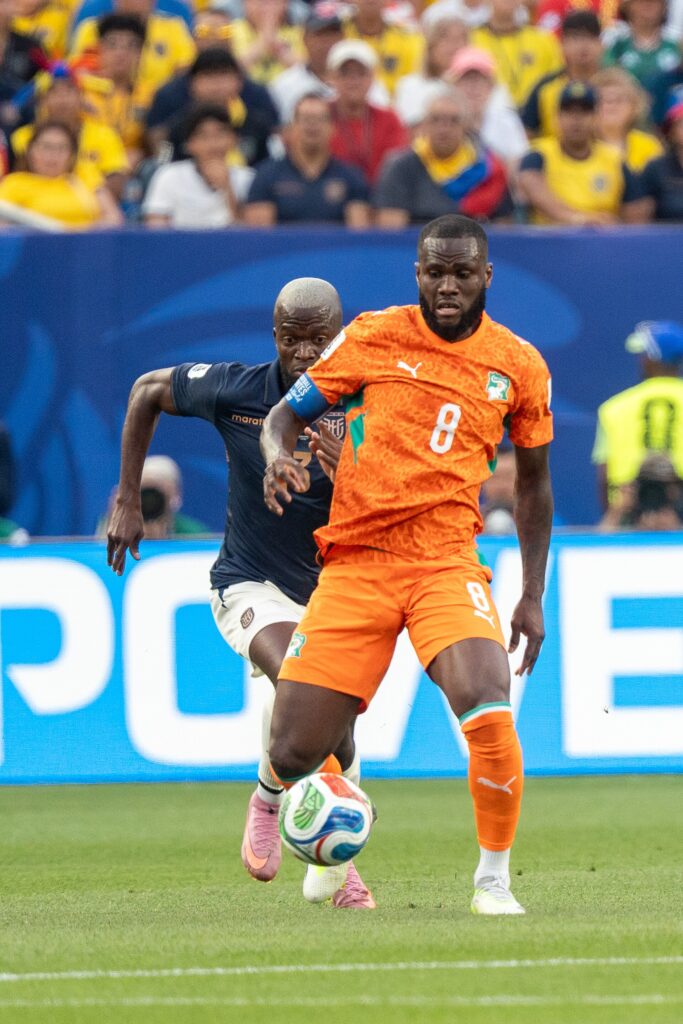
A debut strike from Malick Yalcouye just before half-time and a second-half penalty converted by Franck Kessié settled Côte d’Ivoire’s 2-0 win over Ghana in Bouaké, handing the hosts an early edge in Group C of the 2027 Africa Cup of Nations qualifiers. The match at the Stade de la Paix tightened into a dispute over the spot-kick that doubled the lead, with Black Stars coach Carlos Queiroz calling it “a joke” and questioning the absence of VAR in AFCON qualifying.
Ghana, who blooded three debutants from the start and lost captain Alexander Djiku to injury during the game, created late chances but met a firm response from goalkeeper Yahia Fofana and a well-organised Ivorian back line. Queiroz, “very proud” of his players, insisted the performance merited more and vowed that when Côte d’Ivoire visit Accra, “we are going to win.”
How Bouaké was won: a debut dagger and a disputed second
The first half was largely even until Yalcouye found the space that mattered. The Ivorian debutant made room at the edge of Ghana’s penalty area and drove past Lawrence Ati‑Zigi to give the hosts the lead shortly before the interval, a blow Ghana’s returning captain Djiku later admitted had “killed us a little bit” heading into the break.
The game’s hinge moment came soon after the restart. Côte d’Ivoire were awarded a penalty after a foul on Yalcouye; Kessié stepped up and sent Ati‑Zigi the wrong way from the spot to make it 2-0. From there, the Elephants managed the game with control of possession in phases, while Ghana chased a foothold and the controversy around the decision began to build.
Ghana’s best route back arrived in the final quarter of an hour. In the 76th minute Caleb Yirenkyi’s shot from inside the area was repelled by Fofana, before Benjamin Tetteh’s effort from an Abdul Fatawu Issahaku cross was blocked. Augustine Boakye then curled one across the face of goal, narrowly missing as home supporters breathed a sigh of relief.
Queiroz’s fury, pride and a promise for Accra
Carlos Queiroz’s post-match tone mixed indignation with defiance. “That penalty is a joke,” he said, arguing the call made recovery far harder at 2-0 than at 1-0. He broadened the point to the tools available to officials: “Why don’t we have VAR in Africa? What is the reason we don’t have VAR in a single Africa Cup of Nations qualifier?”
He was just as keen to underline what he felt Ghana did well. “In terms of possession, Cote d’Ivoire were better than us, but in terms of attacking penetration and creating opportunities, we were better,” Queiroz said. “We had four clear opportunities to score in front of goal, but it didn’t happen.” Calling the opener a “brilliant strike” after a lapse in covering space, he added that the Black Stars needed greater inspiration in front of goal. He closed with a vow: “When Cote d’Ivoire come to play Ghana, we will level the head-to-head to 16 wins each. We are going to win. I have no doubt we are going to win that game.”
New-look Black Stars show flashes amid a hard lesson
Queiroz’s XI in Bouaké had a notable freshness. He started three debutants — Kojo Oppong Peprah, Christopher Bonsu Baah and Brandon Thomas‑Asante — with Caleb Yirenkyi and Kwasi Sibo paired in midfield. Issahaku, Ernest Nuamah and Bonsu Baah were tasked with providing Thomas‑Asante service and support in the front line.
Chasing the game after Kessié’s penalty, Ghana turned to the bench for punch. Felix Afena‑Gyan, Augustine Boakye and Benjamin Tetteh were introduced, and the visitors duly produced their clearest looks: Yirenkyi’s 76th‑minute strike that drew a big save from Fofana, Tetteh’s blocked effort from an Issahaku cross, and Boakye’s curler that skimmed across goal. Those moments aligned with Queiroz’s view that the Black Stars were superior in “attacking penetration.”
The coach later explained that Ghana adopted a more vertical approach, with Benjamin and Felix brought on to change the attacking profile. He pointed to missed chances for Augustine, Benjamin and Sibo, and lamented that the team “have now failed to find the net in another match.” Even so, he reiterated he was “very proud” of a group that, in his telling, created enough to score away to a major rival.
Captain down, voice up: Djiku’s injury and message
There was a further in-game setback for Ghana when Djiku — making his national-team return after missing the 2026 FIFA World Cup through injury — was forced off. Jonas Adjetey replaced the captain, and later Ibrahim Sulemana came on for Oppong Peprah as Queiroz shuffled personnel in the push to respond.
Djiku’s assessment was blunt about the two key moments and generous about the effort from a youthful side. “We have to, to improve our approach. Of course, today I think, we fought well with the team, with a lot of young guys so I’m proud of them. Unfortunately, we conceded this goal before the halftime, who killed us a little bit but then I think this penalty was no fault and, for me, I don’t like to speak about referee but I think he killed again because after two nil it’s difficult to, to come back,” he told 3Sports. The tone matched his coach’s: accept the fight, dispute the decision, move on quickly.
The detail
The penalty flashpoint and the no‑VAR undertow
Queiroz fixated on the hinge between 1-0 and 2-0, and the mechanism that took it there. He called the award against Ghana “a joke” and highlighted the absence of VAR across AFCON qualifiers: “Why don’t we have VAR in Africa? What is the reason we don’t have VAR in a single Africa Cup of Nations qualifier?” Without a review system, the coach argued, subjective calls that carry high leverage — a penalty at 1-0 away, early in a qualifying group — cannot be revisited. Alexander Djiku echoed the grievance from a player’s vantage point, saying “this penalty was no fault” and that after 2-0 “it’s difficult to, to come back.”
The lack of a technological backstop became the post-match argument precisely because Ghana still had tactical breath in the game. Queiroz contrasted Côte d’Ivoire’s longer spells of possession with what he termed Ghana’s superior “attacking penetration,” citing chances for Augustine, Benjamin and Sibo. He framed his substitutions — Benjamin Tetteh and Felix Afena‑Gyan — as a move towards greater verticality, and the ensuing chances (Yirenkyi’s on 76 minutes, plus Tetteh and Boakye’s looks) gave that argument ballast. In a rivalry that he noted now reads 16-15, the coach cast the officiating moment as the swing that turned competitive promise into a two‑goal deficit.
| On | Off |
|---|---|
| Jonas Adjetey | Alexander Djiku |
| Ibrahim Sulemana | Kojo Oppong Peprah |
| Felix Afena-Gyan | — |
| Augustine Boakye | — |
| Benjamin Tetteh | — |
The early Group C picture and the Accra test to come
The result gives Côte d’Ivoire the first stride in Group C and leaves Ghana on zero points from their opener. Ghanasoccernet noted that the outcome “gives Cote d’Ivoire an early advantage in the qualifying campaign,” while the Black Stars “reflect on missed opportunities after a difficult opening match.” The calendar offers little time to dwell: The Gambia visit the Accra Sports Stadium on 29 September.
Queiroz insisted “this result will not affect our morale and our belief in our players,” and pegged the immediate priorities as recovery, preparation and winning the next match at home. He framed the rivalry with Côte d’Ivoire in historical terms too, saying the hosts now lead the head‑to‑head 16‑15 and promising to “level the head-to-head to 16 wins each” when the Elephants travel to Accra. That tone sets a clear public standard for the response.
Practically, Accra is about turning promising phases into goals. The manager’s post-game ledger — four clear chances that went untaken, attacking superiority against the run of possession — underlines the work ahead for a group that integrated new faces and lost its captain mid-match in Bouaké. The Gambia, on Ghanaian soil, becomes both a platform to steady Group C and a dress rehearsal for the return meeting Queiroz has already fixed in his sights.
What carried forward from Bouaké — and what must change
The positives Queiroz drew are clear enough: intensity against elite opponents away from home, debutants who did not shrink, and a bench that helped create chances. His tweaks towards verticality produced a flurry, and his attackers — Issahaku with the cross, Tetteh and Boakye with late efforts, Yirenkyi with the best look — ensured the hosts could not coast through the final half‑hour.
But the margins were unforgiving. A “brilliant strike” conceded just before the break put Ghana in a hole, the disputed penalty deepened it, and the finishing touch was missing when the openings came. With Djiku calling for improvements and the coach adamant the morale remains intact, Accra on 29 September now carries dual weight: stabilise the start of this qualifying campaign and validate the belief that, as Queiroz put it, “we are going to win” when Côte d’Ivoire come to town.
Sources: Ghana beaten by Cote dIvoire in 2027 Africa Cup of Nations qualifier (ghanasoccernet.com); Ghana begin 2027 Africa Cup of Nations qualifying with defeat by Cote dIvoire (ghanasoccernet.com); Queiroz vows Ghana will beat Cote dIvoire in Accra after qualifier defeat (ghanasoccernet.com); Alexander Djiku urges Ghana to regroup after opening AFCON qualifier loss to Cote dâIvoire (ghanasoccernet.com)
Images: Cover: Marc2taki / Wikimedia Commons (CC BY-SA 4.0); Figure 1: Bryan Berlin / Wikimedia Commons (CC BY-SA 4.0); Figure 2: Fanti Salms / Wikimedia Commons (CC BY-SA 4.0)
How this article was made: Football Africa uses AI tools to structure, format and optimise its articles, and occasionally to produce illustrated covers where no free photograph exists. The reporting these articles are based on is human-produced and cited above. Spotted an error? Write to [email protected] and we will correct it. — The editors How we work.